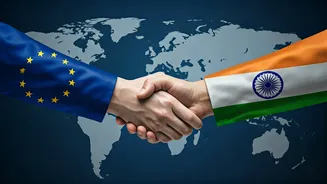

A New Partnership
The culmination of India-EU trade talks represents a notable achievement in international diplomacy. The negotiations, marked by periods of uncertainty,
finally resulted in deals focusing on security, defense, and mobility partnerships. The finalization of the FTA, which signifies a more secure global economy, also underlines the dedication of both parties to strengthen their ties. These agreements were seen as vital to adapt to the unpredictable changes in the world. The pact promises benefits for both entities, reinforcing the importance of collaboration in facing global challenges. This historic deal marks a new phase in the relationship between India and the EU, opening opportunities for economic growth and cooperation in key sectors.
Geo-Economic Shifts
The India-EU trade talks were significantly influenced by the shifts in the geo-economic landscape. The talks experienced a boost as a result of international conditions. Both parties recognized the necessity of adapting to a more dynamic global order, where strategic partnerships are essential. These changes pushed both India and the EU to expedite their negotiations and find common ground. The FTA's conclusion is, in part, a response to an unpredictable world, demonstrating the need for collaboration to manage trade and investment. The shifting global economy created new incentives and also highlighted the urgency of solidifying economic ties. India and the EU moved toward this alliance because of the pressure to establish stronger trade relations, ensuring economic stability amid global uncertainties. This strategic response showcases how external influences can play a key role in shaping international relations and economic partnerships.
Diplomacy and Outcomes
The India-EU Free Trade Agreement (FTA) is less a triumph of patient diplomacy and more a response to an unpredictable world. The FTA negotiations went through various stages, with significant breakthroughs eventually leading to the signing of various agreements. These deals covered several topics, including security, defense, and mobility partnerships. India and the EU sought to establish the pact as a symbol of their dedication to maintaining a stable global economy. Despite challenges and uncertainties, both parties maintained their commitment to reaching a mutually advantageous agreement. The agreement's completion is a testament to the efforts of both sides to strengthen their ties. These efforts were a vital step toward fostering deeper ties and cooperation in a global environment that required strategic partnerships. This shows the importance of building bridges, especially when faced with global economic challenges.