




The Spice of Life
Spices, historically traded like precious metals, continue to hold significant value in today's global market. Their elevated cost is rarely arbitrary,
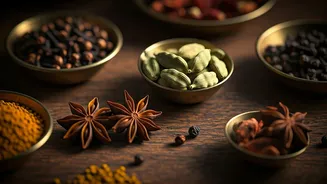
stemming instead from intricate cultivation, challenging harvesting techniques, and substantial worldwide demand. Many of these prized ingredients require extensive manual intervention and are confined to specific geographical areas, making their production a delicate and costly affair. This exploration highlights six of the most financially significant spices, a testament to the enduring allure and economic impact of these flavourful treasures.
Asafoetida's Resin
Asafoetida, a potent spice derived from the resin of certain plants, earns its high price tag primarily due to the formidable obstacles in its procurement. The plant itself thrives only in restricted geographical locations, and the process of extracting the resin is exceptionally labor-intensive. This requires skilled hands and considerable time, contributing significantly to its cost. Widely utilized in Indian culinary traditions and traditional medicine for its distinct pungent aroma and flavour-enhancing properties, asafoetida's unique appeal and challenging production solidifies its status as an expensive spice.
Cardamom's Crown
Often hailed as the 'queen of spices,' cardamom is celebrated for its intensely fragrant aroma and distinctive, robust flavour. Its high valuation is intrinsically linked to the meticulous hand-harvesting process required to gather its delicate pods at their peak. Furthermore, cardamom flourishes exclusively in humid, tropical environments, limiting its cultivation zones. The persistent and substantial demand for this spice across diverse global cuisines consistently drives its price upwards, reinforcing its regal position in the spice hierarchy.
True Cinnamon's Bark
Ceylon cinnamon, often referred to as 'true cinnamon,' commands a premium price due to the exceptionally delicate and precise method of harvesting its bark. This prized spice grows predominantly in limited regions, with Sri Lanka being a notable source. The subtle, nuanced flavour profile and well-documented health benefits of Ceylon cinnamon contribute to its desirability and elevated market value on a global scale, distinguishing it from other varieties.
Clove Buds Bloom
Cloves, the dried flower buds of the Syzygium aromaticum tree, must be harvested at a very specific moment to ensure the optimal development of their potent flavour and aroma. The primary cultivation of cloves is concentrated in Indonesia, where careful processing is paramount. Their strong, penetrating scent and recognized medicinal properties have long made them a highly valued commodity, contributing to their significant cost in the international market.
Saffron's Golden Threads
Saffron, unequivocally the world's most expensive spice, frequently surpasses the value of gold on a per-gram basis. Its astronomical cost is a direct result of its origin: the delicate stigmas of the Crocus sativus flower. Harvesting these minute threads is an intensely manual task, requiring thousands of flowers to yield even a small quantity of spice. Coupled with a very brief harvest season and the painstaking nature of hand-picking, saffron's extreme rarity and labour-intensive production justify its unparalleled price point.
Vanilla's Orchid Pod
Vanilla, derived from the pods of the vanilla orchid, is an exceptionally costly spice due to its intricate cultivation and lengthy preparation. Each delicate orchid flower must be painstakingly hand-pollinated, a process that requires precise timing and skilled intervention. The plant's growth is restricted to specific tropical climates, with Madagascar being a primary producer. Following pollination, the pods undergo a months-long curing process, a time-consuming and labor-intensive ritual that adds substantially to its final, premium price.