





Mumbai's Colonial Gem
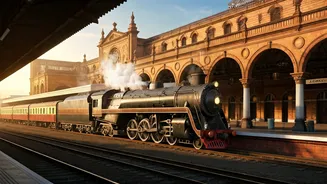
Byculla Railway Station, established in 1853, holds the distinction of being a cornerstone of India's very first railway line, connecting Mumbai to Thane.
This station is not merely a transit point; it's a living monument to the dawn of Indian railways. Even today, it proudly showcases architectural elements from its colonial past, continuing to be an essential stop within the bustling Mumbai Suburban Railway network. Its presence on this historic route underscores its foundational importance in the development of rail transport in the region, linking passengers to the city's vibrant present while preserving a tangible piece of its history for all to see and experience.
Kolkata's Gateway Hub
Howrah Junction, operational since 1854, has served as Kolkata's primary railway gateway and a pivotal transit point for eastern India for well over a century. Its strategic location and continuous operation have cemented its status as one of the nation's most active and historically significant railway terminals. The station's enduring importance reflects its role in facilitating trade and travel across vast distances, connecting diverse regions and contributing significantly to the economic and social fabric of eastern India. Its bustling platforms and extensive network continue to echo the early days of railway expansion.
The Allahabad Legacy
Established in 1859, Allahabad Junction, now known as Prayagraj, played an indispensable role in the early expansion of India's railway network. Positioned strategically, it served as a critical junction connecting the northern and eastern parts of the country during the nascent stages of railway development. Its historical significance lies in its contribution to unifying the vast Indian subcontinent through rail, facilitating the movement of people and goods across extensive distances. Even today, it remains a testament to the foresight and engineering prowess of the era, a vital link in the nation's ongoing journey.
Kanpur's Industrial Link
Kanpur Central Railway Station, dating back to 1859, was a cornerstone of railway infrastructure in northern India during the British Raj. This station was instrumental in connecting key industrial centers and military outposts, thereby playing a crucial role in the region's economic and strategic development. Its existence facilitated the efficient transport of raw materials, finished goods, and military personnel, underscoring its importance in both commerce and governance. The station's enduring presence signifies its long-standing contribution to the connectivity and progress of northern India.
Chennai's Southern Pioneer
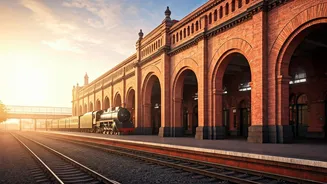
Royapuram Railway Station, inaugurated in 1856, stands proudly as the oldest still-operational railway station in all of India. Located in Chennai, it represents the pioneering spirit of railway expansion in South India. Its architecture, a distinctive echo of the colonial era, provides a visual narrative of the early days of rail travel in the region. More than just a historic building, Royapuram has been a continuous artery for transport, connecting communities and contributing to the growth of South India, all while preserving its unique heritage for future generations.
Mumbai's UNESCO Icon
Chhatrapati Shivaji Maharaj Terminus (formerly Victoria Terminus), built in 1887, is a globally recognized landmark and a UNESCO World Heritage Site. Located in Mumbai, its breathtaking Victorian Gothic architecture makes it one of India's most visually stunning and celebrated railway stations. This architectural masterpiece is not only a testament to exquisite design but also a vital operational hub, handling immense passenger traffic daily. Its designation as a World Heritage Site underscores its cultural and historical importance, drawing admiration from visitors worldwide for its grandeur and enduring legacy.