







Baking Soda Brilliance
Baking soda emerges as a remarkably versatile cleaning ally, lauded by professionals for its ability to scrub away dirt and neutralize odors without harsh
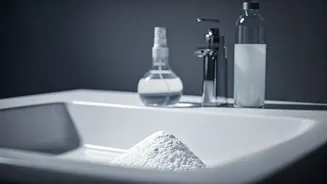
chemicals. For tackling shower and tub grime, a simple paste formed with a 2:1 ratio of baking soda to water proves effective. Applied to tiled walls, shower floors, and stained grout, it’s left to work for five to ten minutes before scrubbing and rinsing. In the toilet, a generous dusting inside the bowl and under the rim, left for fifteen to twenty minutes, allows the baking soda to cleanse and deodorize, before a good scrub with a toilet brush. Sinks and faucets benefit from a sprinkle followed by scrubbing with a damp sponge, with a paste tackling stubborn toothpaste residue, soap buildup, and hard water spots. Countertops are easily cleaned with a baking soda and water solution, though a cautious test on natural stone is advised to prevent dulling. For floors, dissolving half a cup of baking soda in warm water creates a potent mopping solution that effectively cleans grout lines and perimeters, requiring a rinse and thorough drying afterward.
Hydrogen Peroxide Power
Hydrogen peroxide stands out as a go-to for comprehensive bathroom sanitation, favored for its effectiveness and safety across most surfaces. To refresh showers and tubs, a liberal spray followed by a few minutes of dwell time, then a good scrub, lifts stubborn soap scum and grime. The interior and exterior of toilets can be sprayed, and pouring half a cup into the bowl aids sanitization and stain removal, requiring a twenty-minute wait before scrubbing, wiping, and flushing. Sinks and faucets are easily revitalized by spraying hydrogen peroxide, letting it sit briefly, and wiping clean; it efficiently cuts through toothpaste, soap scum, and light buildup. This same spray-and-wipe method is equally effective on bathroom countertops. For floors, a light misting followed by wiping with a flat mop or microfiber cloth ensures a quick sanitation without leaving residue, making it an ideal choice for maintaining a clean and hygienic bathroom environment.
Vinegar's Virtues
White vinegar proves exceptionally adept at combating bathroom cleanliness challenges, particularly in areas with hard water. Its acidic nature effectively breaks down mineral layers that trap grime and dull surfaces, addressing the root cause of many cleaning issues. For showers and tubs, an equal-parts mixture of white vinegar and water, sprayed onto tiles and glass, left for a few minutes, then rinsed and wiped, restores shine. The toilet bowl can be treated by pouring two to four cups of vinegar, letting it sit for an hour, then scrubbing and flushing for a low-effort solution to mineral buildup. Sinks and faucets benefit from the same diluted vinegar spray, which cuts through chalky layers and revives their shine. Countertops also receive a boost from this solution for light mineral deposits, though caution is urged on natural stone due to potential etching. Bathroom floors can also be refreshed with a diluted vinegar solution, reiterating the importance of avoiding natural stone surfaces with this acidic cleaner.