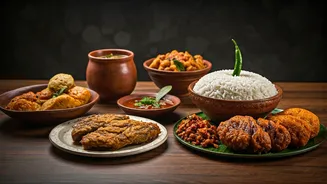







Khichuri: A Staple
Khichuri, a delectable mix of rice and lentils, stands as a cornerstone of the Saraswati Pujo feast. This dish isn't just sustenance; it represents togetherness
and is cooked with care and precision, often using aromatic spices and seasonal vegetables. Its simplicity belies its depth of flavor, making it a favorite across generations. The dish's versatility allows for variations, with some families adding vegetables to enhance the taste and nutritional value. The preparation is a communal effort, strengthening bonds within families and communities. The fragrant aroma of Khichuri cooking fills homes and temples, creating an inviting atmosphere that symbolizes the joy of the occasion. Traditionally eaten as the main offering to the goddess, Khichuri brings people together to share a meal, fostering a sense of community and celebration.
Gota Sheddho: A Celebration
Gota Sheddho, a mixed vegetable dish, is another significant element of the Saraswati Pujo culinary tradition. This dish often incorporates various root vegetables and other seasonal produce, meticulously boiled and seasoned to perfection. The selection of vegetables can vary, with choices often reflecting regional availability and family preferences. The cooking process is slow and gentle, allowing the flavors to meld beautifully, creating a symphony of tastes and textures. Served with the Khichuri, Gota Sheddho offers a refreshing contrast and adds nutritional diversity to the meal. It is a symbol of the bounty of the harvest and the richness of Bengali cuisine. The preparation of Gota Sheddho is a communal effort. The dish is a testament to the Bengali culinary heritage, showcasing the importance of fresh ingredients and simple cooking methods.
Hilsa: The Star
The presence of Hilsa fish is almost a requirement for a Bengali Saraswati Pujo. This highly prized fish, known for its rich flavor and delicate texture, is prepared in various ways during the festival. Whether steamed, fried, or cooked in a flavorful curry, Hilsa represents prosperity and indulgence. Its availability often depends on the season and can be a significant expense, making it an even more special addition to the festive menu. The preparation of Hilsa involves careful handling and cooking techniques to preserve its unique taste. The fish is often marinated in spices and gently cooked to allow its natural flavors to shine. For many Bengalis, eating Hilsa during Saraswati Pujo is a non-negotiable part of the celebration. The inclusion of Hilsa signifies the importance of cultural traditions and the enjoyment of life's finer pleasures. The dishes made are not just delicious; they provide a connection to the culture.
Rituals and Recipes
The culinary practices of Saraswati Pujo are deeply rooted in tradition and often passed down through generations. Recipes are not just instructions; they are stories of family history and cultural identity. The preparation of the dishes is usually a collaborative effort, with family members contributing to the cooking process, strengthening bonds and creating memories. Each step, from sourcing ingredients to serving the final dish, is imbued with a sense of purpose and celebration. The specific recipes and cooking methods vary across different regions and families, reflecting the diversity of Bengali cuisine. Preserving these culinary traditions ensures that future generations will experience and appreciate the cultural richness of Saraswati Pujo. These are not merely dishes; they are vessels carrying cultural heritage.
Beyond the Food
While the food is central to Saraswati Pujo, the event is also about celebrating knowledge, arts, and music. The festival honors the goddess Saraswati, the deity of wisdom and learning. The offerings of food are part of the broader celebration that includes prayers, cultural performances, and the display of artistic creations. The spirit of the festival is one of joy, learning, and community. The food served acts as a unifying element that brings people together to share a meal and celebrate. The festive occasion provides a platform for artistic and cultural expression. Thus, the significance extends beyond the culinary aspects, embracing various facets of Bengali culture and heritage. The experience is about savoring the food and also immersing in the festive atmosphere.