






Cosmic Dust Spectacle
The Eta Aquarid meteor shower, a yearly celestial treat, is gracing our skies once more, promising bright streaks of light caused by the remnants of the famed
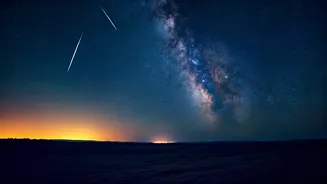
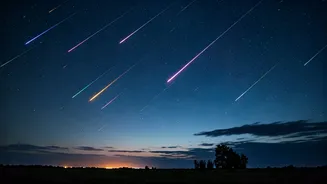
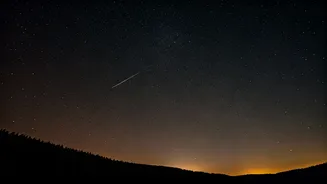
Halley's Comet. As Earth passes through the comet's debris trail, tiny particles enter our atmosphere at tremendous speeds, burning up to create the mesmerizing 'shooting stars' we observe. While this phenomenon is often more dramatic in the Southern Hemisphere, observers in India can still anticipate a noteworthy show. The key lies in understanding the science behind these fleeting lights: as our planet navigates this cosmic dust stream annually, the friction with the atmosphere ignites these particles, resulting in vivid trails across the night sky, making the Eta Aquarids one of the year's swifter and more visually striking meteor showers. Despite the shower's stronger presence elsewhere, favorable conditions in India can still reveal a significant number of these cosmic visitors.
Prime Viewing in India
For those in India eager to witness the Eta Aquarid meteor shower, the optimal viewing window is set for the early morning hours of May 6, 2026, following the peak on the night of May 5–6. The most opportune time to catch these shooting stars is between 3:00 AM and 5:00 AM Indian Standard Time, just before the sun begins to rise. This pre-dawn period is crucial because the shower's radiant point—the celestial spot from which the meteors appear to emanate—ascends higher in the sky, significantly increasing the frequency of observable meteors. Should local conditions prevent a clear view, sky gazers can still experience the event through free online live streams offered by observatories and sky cameras globally, ensuring the spectacle is accessible from anywhere.
What to Anticipate
Under perfect atmospheric conditions, Indian skywatchers might witness between 10 and 30 meteors per hour. However, this year's viewing experience could be somewhat muted by the presence of a bright waning gibbous moon, which tends to obscure fainter meteors, potentially reducing the observable count to fewer than 10 per hour in many regions. Nevertheless, the Eta Aquarids are renowned for their impressive speed and luminous trails, meaning any meteors spotted are likely to be particularly bright and memorable. To best position yourself, direct your gaze towards the eastern horizon in the pre-dawn hours. The meteors will appear to radiate from the constellation Aquarius. Instead of focusing directly on Aquarius, it's more effective to scan a darker area of the sky approximately 30 to 40 degrees away from it, roughly the span of four fisted hands held at arm's length, as meteors tend to leave longer streaks in these peripheral zones.