



WFH Revelation
A Mumbai-based tech professional recently ignited a significant online conversation by expressing frustration over the necessity of prolonged daily commutes
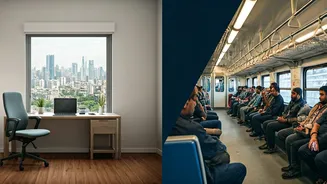
to the office. This individual, after experiencing the advantages of working remotely for 20 consecutive days, shared their candid thoughts on LinkedIn. The stark contrast between the productivity and ease experienced during the work-from-home period and the subsequent arduous journey back to the physical office prompted a critical question: 'After 20 days of WFH, I'm back in the office for 2 days. The commute is 2 hours one way. I'm already tired and it's only 10 AM. Why is this still not normalized?' This sentiment quickly resonated with a large audience, many of whom concurred that the traditional five-day in-office work model might indeed be an outdated construct in the current professional landscape. The pandemic, they argued, had unequivocally demonstrated the feasibility and advantages of remote work for a substantial number of roles, prompting a re-evaluation of corporate policies to embrace greater flexibility.
Commute's Toll
The core of the debate centers on the sheer exhaustion and time expenditure associated with daily commutes, particularly in a bustling metropolis like Mumbai. One woman shared her personal experience, illustrating how a recent hairline fracture led to a mandated 20-day work-from-home period. Within just a week of this remote setup, she began to question the widespread adherence to lengthy office travel. She elaborated on how nearly four hours of her day were consumed by travel, a process she described as incredibly draining. This time, she noted, could be far better utilized for personal development, family engagement, or even increased work focus. The shift to remote work allowed her to adopt a healthier routine, marked by peaceful meals, adequate sleep, personal time, and exercise, all contributing to a significantly improved work-life experience. She emphasized that without the daily rush to catch trains or navigate traffic, she felt more concentrated and engaged in her tasks, attributing this heightened productivity to the absence of travel-induced fatigue.
Online Reaction
The sentiments expressed by both professionals quickly garnered widespread agreement and sparked further discussion across various social media platforms. Many online users echoed the sentiment that a work-from-home or hybrid model represents the optimal path for achieving maximum productivity, provided that intrusive micromanagement is not prevalent. Numerous individuals highlighted the profound positive impacts of hybrid work on mental, financial, and physical well-being, asserting these benefits unequivocally. The consensus among many was that for roles where a physical presence isn't a prerequisite, remote work should indeed become the standard. Critics of the traditional office setup pointed out the often-overlooked fact that companies, while emphasizing productivity, frequently disregard the substantial amount of energy that daily travel depletes from employees. This collective online reaction underscores a growing professional desire for more adaptable work policies that prioritize efficiency and employee comfort over rigid, office-centric norms that were established long before the widespread adoption of digital collaboration tools.