




Orbital Data Centers Emerge
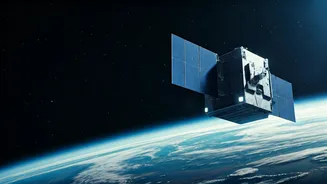
The notion of data centers operating beyond Earth's atmosphere is rapidly transitioning from a theoretical concept to an imminent reality. A significant
surge in investment is fueling this race to establish off-planet computing capabilities, bringing both unprecedented opportunities and complex challenges into sharper focus. Industry leaders are actively pursuing financial backing to pioneer this new era, emphasizing the crucial need for robust infrastructure in space. This development marks a pivotal moment, as the space sector prepares to handle increasingly sophisticated computational tasks directly in orbit, moving beyond terrestrial limitations and opening doors to new mission paradigms and scientific discoveries.
Powering Space Computing
A primary obstacle in deploying and sustaining advanced computing capabilities in space revolves around reliable and ample power supply. Emerging solutions, such as harnessing solar and nuclear energy, are being rigorously explored as potential answers to this critical hurdle. Innovations in solar power beaming, for instance, aim to provide concentrated energy to client satellites, potentially increasing their power generation significantly. This advancement could empower more demanding payloads and complex mission objectives, all while streamlining the overall design and cost associated with larger satellite structures and extensive solar arrays. The effective management of power resources is paramount to unlocking the full potential of on-orbit data processing and ensuring sustained operations.
AI's Role in Space
The accelerating proliferation of Artificial Intelligence (AI) is fundamentally altering the considerations for what computational tasks are best performed on Earth versus what can be efficiently managed in space. AI's capacity for rapid data analysis and decision-making makes it an ideal candidate for on-orbit processing, especially for missions requiring near real-time insights. This strategic shift involves a careful assessment of latency requirements, bandwidth limitations, and the potential benefits of processing data closer to its source. As AI capabilities advance, the calculus for data handling in space will continue to evolve, driving the development of more sophisticated and autonomous space systems capable of independent operation and analysis.