





A Floral Marvel
The corkscrew vine, scientifically known as Cochliasanthus caracalla, is a rapidly growing climber hailing from tropical regions of South and Central America.
Its truly unique blossoms, reminiscent of tiny, spiraling nautilus shells, earn it the charming moniker 'snail vine.' These flowers boast a delightful palette of white, creamy yellow, and soft purple hues. Adding to its allure, the vine releases a subtly sweet, captivating fragrance, akin to an upscale candle but perfectly suited for an outdoor ambiance. Crucially, its extended blooming period, from late spring right through to autumn, coincides precisely with the peak activity of hummingbirds across much of the United States, making it an ideal, consistent food source during their active months.
Hummingbird Magnet
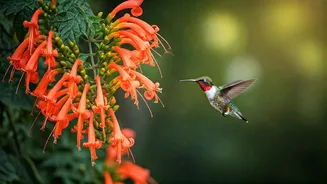
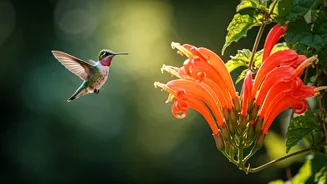
Hummingbirds aren't guided by chance; their movements are dictated by the availability of nectar and the allure of specific flower shapes that complement their delicate anatomy. The corkscrew vine's bloom is a masterclass in pollinator design: its tubular, spiraling form is essentially a hummingbird's dream. The long beak and extensible tongue of these tiny birds are perfectly engineered to access the nectar hidden deep within these flowers. This precise fit is more than anecdotal; research published in scientific journals has confirmed that the intricate, asymmetrical structure of Cochliasanthus caracalla's blossoms is specifically evolved to attract and reward particular pollinators, with hummingbirds being a prime example. Furthermore, the vine's vibrant, warm colors play a significant role, as hummingbirds are notoriously drawn to vivid, eye-catching hues. Studies on their foraging habits consistently show that these birds will reliably return to flower sources that offer a steady and abundant supply of high-quality nectar, precisely the kind of reliable reward the corkscrew vine provides throughout its lengthy bloom cycle.
Effortless Cultivation
The good news for aspiring hummingbird enthusiasts is that the corkscrew vine is remarkably low-maintenance, requiring only a few key considerations to thrive. It absolutely needs full sun, meaning at least six to eight hours of direct sunlight daily; a south or west-facing location on a fence, porch, or trellis is ideal. Consistent moisture is also vital; the soil should remain damp but never waterlogged, as the vine will wilt significantly during dry spells. If planted in a container, it will dry out more rapidly and necessitate closer attention to watering. For soil, a well-drained, slightly acidic mix is preferred; a good quality outdoor potting mix works well for container cultivation. As a voracious grower, it benefits from a balanced liquid fertilizer applied monthly throughout its growing season to support its abundant flowering. Minimal pruning is required, typically a light tidying in late winter or early spring before new growth emerges, with tips pinched back and any dead stems removed to encourage a bushier appearance.
Container Gardening Advantage
Given the corkscrew vine's vigorous growth and tendency to spread, container gardening is an excellent strategy, particularly for those with limited yard space or for apartment dwellers. Growing it in a sizable pot effectively manages its size, allows for repositioning to optimize sun exposure, and still enables it to deliver on its promise of abundant blooms, delightful fragrance, and pollinator attraction. A large container placed near a patio door or secured to a balcony railing, with a simple trellis for support, is all that's needed. This approach negates the requirement for a sprawling backyard, making it accessible to a wider range of gardeners. This method ensures you can enjoy the visual and aromatic spectacle, and the visiting hummingbirds, even in a compact outdoor setting.
Planting and Zones
For gardeners residing in USDA hardiness zones 9 through 11—encompassing regions like Southern California, Arizona, Texas, and Florida, or generally anywhere that avoids severe frost—the corkscrew vine flourishes as a perennial, returning year after year. The optimal time for planting is in the spring, after the last danger of frost has passed. Simply provide it with a structure to climb, and it will establish itself. If you live in a cooler climate with harsher winters, it's best to treat it as an annual. You will still experience its full blooming glory throughout the summer months, but it will not survive the winter outdoors. Regardless of climate, the vine's ability to attract hummingbirds is undeniable. These birds seek out the most rewarding food sources, and the corkscrew vine consistently ranks high, blooming for extended periods, offering a delightful scent, and requiring relatively little maintenance in return. Its ease of growth and maintenance, coupled with its incredible ability to draw hummingbirds, makes it a surprisingly accessible yet highly effective addition to any garden.