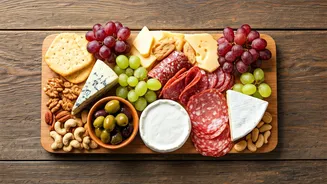








Cheese Selection Essentials
The cornerstone of any outstanding charcuterie board is, without a doubt, the cheese. Offering a variety of textures and flavors is key to delighting your
guests' palates. Begin with at least three to four different cheeses. Consider including a soft cheese, such as brie or camembert, known for its creamy texture. Then, add a semi-hard cheese like Gruyere or Gouda, which brings a nutty or slightly sweet profile. A firm cheese, like aged cheddar or Parmesan, should also be part of the collection for its robust flavor. Lastly, introduce a blue cheese for a sharp, pungent contrast. When selecting cheeses, factor in your guest's preferences and always ensure the cheeses are at their optimal serving temperature, typically around room temperature, to showcase their full flavors and aromas.
Meats: The Perfect Pairings
After considering the cheeses, selecting complementary meats is the next crucial step. The goal is to provide a range of flavors and textures that pair well with the cheeses selected. Include at least three types of cured meats. Prosciutto, with its delicate, salty taste, is a classic choice that pairs well with almost any cheese. Salami offers a variety of flavors depending on the type and spice levels, making it a versatile option. Consider including a spicy meat such as chorizo or a spicy salami for a bit of a kick. When arranging the meats, you can fold, roll, or fan them out to create visual interest. It is also important to consider the fat content in the meats, as the higher the fat content, the more it will compliment the flavour of the cheese.
Adding Savory Elements
Enhancing your charcuterie board with savory additions is key to providing a diverse and interesting experience. These elements provide textural contrast and additional flavors to balance the richness of the cheeses and meats. Include items such as olives, which bring a salty and briny note. Consider adding cornichons or small pickles for a tangy, acidic bite. Nuts, such as almonds, walnuts, or cashews, offer a satisfying crunch and nutty flavor. Marinated vegetables, such as artichoke hearts or roasted peppers, can add a sweetness and moisture component. When placing these elements, use small bowls or separate sections to keep them from mixing and maintain a clean, organized appearance.
Sweet and Fruity Additions
Adding sweet and fruity components to your charcuterie board elevates the flavour profile and provides a refreshing balance to the savory elements. Fresh and dried fruits provide natural sweetness and can be paired with specific cheeses for enhanced flavour combinations. Grapes, berries, and sliced apples or pears are popular choices for fresh fruit. Dried apricots, figs, or dates offer concentrated sweetness and chewy textures. Jams or fruit preserves, such as fig jam or apricot preserves, can be placed in small ramekins and paired with soft cheeses. Honey, with its natural sweetness, can be drizzled over cheeses or served in a small dish with a honey dipper, creating an elegant touch and complementing the board's overall presentation.
The Visual Presentation
Once you have assembled all of the ingredients, the presentation becomes crucial for the overall appeal of the charcuterie board. Choose a board or platter of adequate size to comfortably accommodate all of the items. Start by arranging the cheeses first, as they will take up the most space. Then, place the meats, making sure to vary their arrangements to create visual interest. Fill in the spaces with savory elements, sweet additions, and any other garnishes. Remember to vary the colours and textures to enhance the board's aesthetic appeal. Use small serving utensils for items like jams or honey to keep the board neat, and consider labeling the cheeses with small cards, especially if you have guests who may be unfamiliar with the varieties.
Pairing Drinks Perfectly
To fully enjoy the charcuterie experience, select beverages that complement the flavors of the board. Wine is a classic choice, and the type of wine should be chosen to pair with the cheeses and meats. A light-bodied red wine, such as Pinot Noir, or a dry rosé are versatile choices that pair well with a variety of cheeses. A crisp white wine, like Sauvignon Blanc or Pinot Grigio, complements soft cheeses and lighter meats. Sparkling wine, such as Champagne or Prosecco, can be a refreshing option that cuts through the richness of the cheeses. For non-alcoholic options, consider sparkling water or fruit juices, which offer a palate-cleansing effect between bites.