



Defining Soft Adventure
Soft adventure represents a contemporary approach to travel that skillfully integrates the excitement of exploration with an emphasis on comfort and enjoyment.
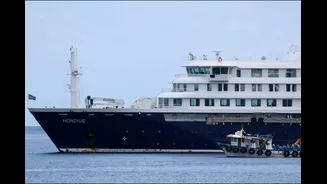
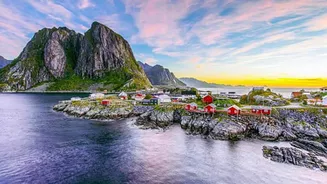
It's about experiencing the world's wonders without the need for extreme physical exertion or hardship. Imagine exploring the vastness of the Antarctic Peninsula from the warmth of a well-appointed expedition ship, complete with spacious cabins, an onboard library, and spa facilities, rather than enduring the rigors of historical expeditions. This concept isn't entirely new; even the 17th and 18th-century Grand Tours allowed travelers to broaden their horizons from within their comfort zones. The term itself, while sounding somewhat contradictory, signifies a travel style where the 'adventure' lies in the destination and experience, rather than the difficulty of the journey. For instance, activities like kayaking through Norwegian fjords or cycling in Spain can be transformed into soft adventures through features like luggage transport, luxurious accommodations, climate-controlled transfers, and the provision of battery-assisted vehicles, making them accessible to a wider audience.
The Growing Popularity
The adventure tourism market is experiencing explosive growth, projected to reach nearly £1.4 trillion by 2033, with soft adventure being the primary driver of this surge. Several factors contribute to this remarkable rise. In our hyper-connected, social media-saturated era, the visual allure of stunning destinations, amplified by platforms like Instagram, ignites wanderlust and inspires even those less inclined towards strenuous activities to seek similar experiences. Paradoxically, a growing desire to disconnect from our digital lives and embrace healthier, more active lifestyles post-pandemic is also fueling this trend. A 2025 Ernst & Young survey indicated that 38% of UK consumers are concerned about their screen time and actively seek digital detoxes. Complementing this, Mastercard's 2025 Travel Trends Report highlighted a European traveler preference for intentional journeys focused on adventure and wellness. This confluence of desires—for escape, well-being, and curated experiences—makes soft adventure an increasingly attractive proposition for a broad demographic.
Accessibility and Appeal
A key reason for the boom in soft adventure is its significantly lower barrier to entry. Unlike traditional adventure travel that often requires specialized skills, extensive physical fitness, or a high tolerance for risk, soft adventures are designed for broader accessibility. Operators like Nature Travels emphasize that while the challenge level is reduced, the fun and enjoyment remain paramount. Liddy Pleasants of Stubborn Mule Travel notes that travelers can adopt a 'fly and flop' mentality, applying it to more active and meaningful pursuits without the mental or physical strain. This means holidays where one doesn't have to constantly strategize or endure hardship. Cycling, for example, has become a cornerstone of this movement due to its inherent scalability; distances, terrains, and the use of e-bikes can be adjusted to suit individual preferences. Tour operators like Explore have seen a 20% increase in demand for their cycling programs, with 'leisurely' and 'moderate' trips proving most popular in destinations such as Portugal and Croatia. Similarly, Saddle Skedaddle reports that approximately 75% of their cycling holidays fall into the soft adventure category, a significant shift from their earlier client base, largely due to e-bikes and GPS navigation making cycling accessible to 'pretty much everybody'.
Evolving Travel Experiences
The travel industry is rapidly adapting to the burgeoning demand for soft adventure, with numerous companies offering enhanced or 'softened' versions of existing trips. This includes concepts like 'Upgraded' small-group adventures, where travelers can opt for superior accommodation, such as a Rajasthani palace or a houseboat on the Okavango Delta. Companies specializing in immersive and sustainable getaways have introduced 'Premium' collections that promise 'Wild days, seriously good stays,' perhaps involving overnights in boutique hotels or ancient kasbahs between hikes. A notable aspect of these trips is their embrace of local accommodation and services, often featuring expert local guides and gourmet picnics. This approach not only enhances the traveler's experience but also significantly benefits local economies, with three-quarters of expenditure on such holidays being reinvested in destinations. Furthermore, soft adventurers often gravitate towards less-visited countries and regions, mitigating overtourism. Destinations like Scandinavia and Antarctica are increasingly sought after, alongside a 68% rise in demand for Albania, particularly for its walking and cycling itineraries. West African nations like Benin and Senegal are also emerging as popular destinations within this trend, offering comfort and a safety net characteristic of soft adventure.
Beyond the Activity
For many embracing soft adventures, the destination itself often provides the primary sense of exploration and excitement. As Liddy Pleasants observes, simply visiting a place like Namibia, Bolivia, or China, especially with family, can feel adventurous enough without requiring participants to engage in strenuous activities. Gentle exploration becomes the focal point. This perspective challenges the notion that soft adventure is merely a diluted form of travel; instead, it's viewed as a distinct and equally valid experience. In soft adventure, while the activity is a component, it is not the sole defining element. The true essence lies in immersing oneself in the local culture and environment, and most importantly, in deriving genuine enjoyment from the journey. This approach prioritizes the overall experience—the cultural immersion, the scenic beauty, and the relaxation—over the physical challenge, offering a different, yet equally rewarding, form of adventure.
Five Comfort-Enhanced Adventures
Several compelling options showcase the best of soft adventure, blending thrilling activities with luxurious touches. For wildlife enthusiasts, spotting leopards in Sri Lanka's Yala National Park offers an exciting pursuit, enhanced by high-quality accommodation, with packages starting from £2,345 for Bed & Breakfast. Island-hopping in Sweden's Stockholm archipelago provides a unique way to explore, utilizing local boats for inter-island travel while luggage is conveniently transferred, with prices from £860 for B&B. Cycling enthusiasts can indulge in a leisurely tour through Piedmont, Italy, focusing on vineyards and scenic vistas. This experience includes e-bikes, luggage transfers, and regular wine and truffle tastings, starting at £1,495 for B&B. For those seeking dramatic landscapes, trekking through the Faroe Islands offers manageable daily walks across captivating terrain, with costs from £3,670 for B&B. Families looking for an unforgettable experience can take their children to Namibia, where they can sleep under the stars, ride the dunes of Sossusvlei, and witness wildlife in Etosha, with itineraries starting from £3,750 per person for B&B.