
Infrastructure Focus
The Union Budget 2027 heavily emphasized infrastructure development, allocating a record Rs 12.22 lakh crore for capital expenditure in FY27. This substantial
investment is expected to bolster the metals and mining sectors, supporting self-reliant India initiatives. Furthermore, the budget included significant provisions for the railways, with a capital expenditure allocation of Rs 2.77 lakh crore. This focus on infrastructure is designed to drive manufacturing and logistics, thereby fostering overall economic growth. The emphasis on infrastructure is also evident in the Northeastern region, where the budget aims to act as a growth engine. The budget's focus on infrastructure development also included an emphasis on the focus of Tier II and III cities, which is important to the development of the nation.
Telecom & Railways Boost
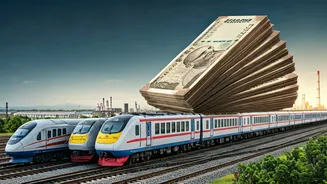
The telecom sector received considerable attention in the FY27 budget, with a total outlay of Rs 73,990 crore. This commitment includes Rs 28,473 crore allocated to Bharat Sanchar Nigam Limited (BSNL). This substantial investment underscores the government's commitment to enhancing and expanding the telecom infrastructure across the country. Parallelly, the railways were allocated a significant Rs 2.77 lakh crore for capital expenditure, highlighting the importance of strengthening the transportation network. These strategic allocations are intended to improve connectivity, boost logistics, and drive overall economic expansion. The substantial financial support towards telecom and railways underscores the government's vision for integrated growth and modernization.
Sectoral Allocations
The Union Budget 2027 saw significant allocations across various sectors. The Ministry of External Affairs (MEA) received Rs 22,118 crore. The AYUSH Ministry's budget increased by 20%, reflecting a focus on traditional medicine and healthcare. The Home Ministry was allocated Rs 2.5 lakh crore, underscoring the government's priorities for internal security. The budget also addressed the needs of the tourism sector, aiming for growth and development. Moreover, the focus was evident in the Jammu and Kashmir region, where the Centre proposed a transfer of Rs 43,290 crore in FY27. These sectoral allocations highlight a comprehensive strategy aimed at balanced development and strategic investments across the board. The budget also showcased its dedication to the support of the MSMEs, with the announcement of a Rs 10,000 crore fund for their growth.
Manufacturing & Exports
The FY27 budget included measures to boost both exports and domestic manufacturing. The government introduced the Chemical Parks Scheme to increase domestic output and rationalized customs duties to promote exports. Moreover, the budget aimed to strengthen the textile sector with the introduction of Mega Textile Parks. These initiatives were expected to foster a business-friendly environment and increase global competitiveness. The focus on exports, coupled with infrastructure development and strategic investments, underlined the government's vision for an economically robust and self-reliant India. The Gems & Jewellery industry also welcomed the budget, anticipating growth from its measures.
Tax & Investment Policies
The budget unveiled several tax and investment-related initiatives. A tax holiday was proposed for cloud firms utilizing Indian data centers, aiming to attract investment and support the digital economy. The budget also introduced tax exemptions for motor accident claims. Additionally, the government announced an IT safe harbor margin at 15.5%. These measures suggest the government's efforts to provide a supportive tax framework. The budget also focused on encouraging investments and enhancing ease of doing business. The combination of tax incentives, and investment-friendly policies reflected the government's commitment to economic growth.
Reactions and Criticism
The Union Budget 2027 drew mixed reactions from various stakeholders. While some sectors welcomed the budget's growth-focused approach, others expressed dissatisfaction. The Kerala Chief Minister criticized the budget, alleging neglect from the Centre. Several industry bodies appreciated the budget's efforts to promote growth and self-reliance. Small industries in Thane applauded the budget's provisions. Conversely, MSMEs voiced disappointment over the absence of specific announcements. Farmers, particularly from Punjab and Haryana, expressed dissatisfaction with the budget. These varied responses show a complex landscape, highlighting different expectations and priorities. These differing reactions are a natural result of any budget, as different groups inevitably find some aspects more beneficial than others.