








Perception and Personality
Optical illusions offer a unique window into how our minds operate, not just to trick the eye but to illuminate the intricate processes our brains undertake
to make sense of the world. Our brains are wired to process information swiftly, often filling in gaps and prioritizing patterns that were historically advantageous for survival. These rapid interpretations can offer clues about our fundamental approach to social interactions, our willingness to embrace challenges, and our emotional processing. The specific illusion presented here serves as a straightforward yet telling illustration: the initial figure you register can indicate whether your core drive is directed outward or inward, providing a gentle prompt for enhanced self-awareness and personal growth. It’s crucial to remember that these are playful tools for introspection, not definitive psychological diagnoses.
The Introvert's Gaze
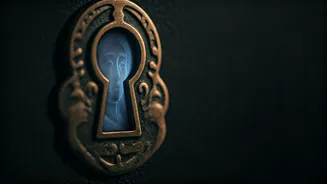
If your immediate recognition was the image of a crying face, it strongly suggests an introverted inclination. Individuals who identify with this perception often process their emotions internally and find solace in solitude for deep thought. They tend to prefer keeping personal challenges private rather than openly discussing them. This inward focus fosters a rich inner life, marked by profound sensitivity and a deep well of empathy. However, this can sometimes lead to a tendency to suppress or 'bottle up' feelings. To foster healthier emotional expression, practices like mindful breathing exercises, consistent journaling, or confiding in a trusted individual can be beneficial, helping to transition from silent introspection to constructive outward communication.
The Extrovert's Vision
Conversely, if the keyhole was the first element to capture your attention, it points towards an extroverted disposition. This suggests a natural curiosity, a zest for adventure, and an eagerness to engage with novel environments and concepts. You likely find joy in traveling and interacting with diverse individuals. Driven by your surroundings, you may be inclined to embrace risks, which often sparks bold decisions and the pursuit of new endeavors. A potential drawback of this outward orientation could be a lack of patience or a tendency to overlook personal needs. Cultivating moments of stillness can be invaluable, enabling you to channel that external curiosity inward and connect more deeply with your own desires and requirements.
Interpreting the Clues
The visual element that initially stands out is less a definitive judgment and more a subtle hint about your brain's preferred method of organizing experiences. When we approach this initial impression with curiosity rather than self-criticism, it transforms into a valuable asset—a friendly, albeit small, guide toward enhanced self-awareness and more considered life choices. The truthfulness of the test result for you is a personal reflection; it prompts a dialogue with oneself. Does the interpretation resonate with your lived experience? In which areas might you seek greater equilibrium, perhaps by nurturing your curiosity while safeguarding your inner reflective space, or by finding your voice more readily while still protecting your peace of mind?
The Illusion's Mechanism
It's important to understand that these 'optical illusion personality tests' are designed for lighthearted self-exploration and should not be mistaken for clinical assessments. The brain's initial interpretation of an image reflects a momentary focus and ingrained biases, rather than a fixed personality trait. Consider the outcome as a starting point for self-discovery and a conversation starter with yourself. The underlying principle of optical illusions lies in their ability to exploit our brain's propensity for making rapid inferences and constructing meaning. This active construction process, influenced by our past experiences, inherent temperament, and neurological makeup, is why individuals can perceive the same image differently. These first impressions, while not absolute pronouncements, serve as metaphorical mirrors, reflecting our habitual patterns of thought and feeling.