





When to Witness
The much-anticipated 'Pink Moon,' signifying the first full moon of spring, is set to reach its zenith on April 2nd. However, for the most breathtaking
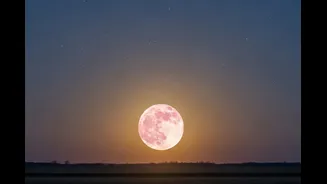
visual experience, stargazers are advised to direct their attention to the evening of April 1st. This is when the moon will begin its ascent above the horizon, offering a dramatic and aesthetically pleasing view. While the peak illumination technically occurs in the early hours of April 2nd, the preceding evening provides the optimal window for observation, ensuring you don't miss the most picturesque moment of this monthly lunar spectacle.
The Name's True Origin
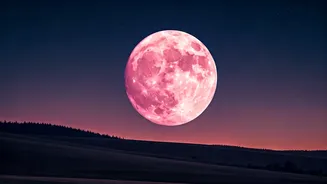
Contrary to popular belief, the April 'Pink Moon' will not actually manifest as a rosy orb in the night sky. The intriguing moniker stems from historical traditions, particularly among early Native American tribes in North America. These communities used the lunar cycles to keep track of the changing seasons. They bestowed the name 'Pink Moon' upon this particular full moon to honor the vibrant pink wildflowers, like the wild ground phlox, that would bloom prolifically at the onset of spring, carpeting the landscape in a stunning display of color. Therefore, the name is a tribute to nature's reawakening rather than the moon's actual hue.
Behind the Golden Hue
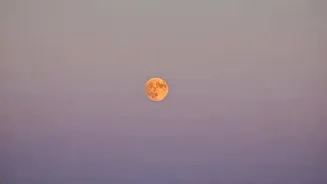
The moon's appearance often deviates from what its name suggests, and the 'Pink Moon' is a prime example. Instead of pink, it typically presents in warm shades of orange, copper, or a rich golden yellow when it appears low on the horizon. This captivating coloration is a result of a simple yet elegant scientific phenomenon. As the moon rises or sets, its light must traverse a greater expanse of Earth's atmosphere to reach our eyes. This atmospheric journey causes shorter, bluer wavelengths of light to scatter away, while the longer, warmer wavelengths—reds, oranges, and yellows—are able to penetrate through more effectively. This is the very same optical principle that paints our skies with magnificent fiery sunsets.
Virgo's Bright Companion
Adding to the celestial allure of the April full moon is its proximity to a brilliant star system. Astronomy enthusiasts have a special treat as they gaze upon the moon; nestled nearby will be an exceptionally bright point of light. This is not just any star; it is Spica, a prominent binary star system situated within the constellation Virgo. The close alignment of Spica with the luminous full moon creates a visually striking and dynamic scene in the night sky, offering an enhanced astronomical experience for those who take the time to observe.
Holiday Calendar Significance
Beyond its visual splendor, the April full moon carries considerable cultural and religious importance, directly influencing the dates for major holidays. It serves as a crucial marker for determining when Easter and Passover are celebrated globally. According to an ancient tradition, Easter is observed on the first Sunday following the first full moon that occurs after the spring equinox. Given that the astronomical spring equinox this year took place on March 20th, this particular April full moon acts as the definitive trigger for the upcoming Easter holiday, solidifying its date in the calendar.
Weather Watch
The visibility of any celestial event is always subject to atmospheric conditions, and the April 'Pink Moon' is no exception. For observers in the UK, the weather forecast presents a mixed outlook. In England and Wales, there's a likelihood of cloud cover and potential rain on Wednesday evening, which could obstruct the view of the moon. However, conditions are expected to be more favorable in Scotland and Northern Ireland, where colder air masses are predicted, offering a greater chance for clear skies and uninterrupted viewing of this spectacular lunar display.