
Choosing the Right Dal
The journey to exceptional moong dal halwa begins with the selection of the correct dal. Opt for split moong dal, also known as yellow moong dal, for the best
results. This variety provides the ideal texture and flavor profile. Ensure the dal is fresh; old dal may not cook evenly, affecting the final texture of the halwa. Rinse the dal thoroughly several times before soaking to remove any impurities. Soaking is a crucial step; it softens the dal, allowing it to cook more evenly and efficiently. The soaking time can vary, typically ranging from a minimum of 2 hours to overnight, depending on the dal's age and the ambient temperature. Longer soaking times generally lead to a smoother, creamier halwa. Remember that while using good quality dal is paramount, the soaking duration is equally important.
Perfect Grinding Techniques
Once the moong dal has soaked sufficiently, it's time to grind it. The grinding process is crucial for achieving the desired texture of the halwa. Avoid grinding the dal into a fine paste. Instead, aim for a coarse, slightly grainy consistency. This texture will allow the halwa to retain some structure and prevent it from becoming overly mushy. Use a grinder or food processor to achieve this. Pulse the dal in short bursts, checking the consistency frequently. Add very little water, only enough to help the grinding process along without making the paste too liquid. The consistency of the ground dal significantly influences the final product's mouthfeel. Grinding it too finely will render a sticky, dense halwa, while an excessively coarse grind will result in a grainy texture, so precision is key here.
The Art of Roasting
Roasting the ground dal is perhaps the most critical step in making moong dal halwa. This process develops the characteristic nutty flavor and rich color of the halwa. In a heavy-bottomed pan, preferably a non-stick one, heat ghee over medium heat. Add the ground dal to the hot ghee and begin roasting. Stir constantly to prevent the dal from sticking to the bottom of the pan and burning. Roast the dal slowly and patiently, allowing it to brown evenly. This typically takes around 30-45 minutes, depending on the quantity. The dal will start to change color, become fragrant, and the ghee will begin to separate. This indicates that the dal is roasted sufficiently. Under-roasting will result in a raw taste, while over-roasting can lead to a burnt flavor. Achieving the perfect roast requires patience and careful monitoring.
Sweetening the Deal
Once the dal is roasted, the next step involves sweetening it to perfection. Add sugar or a sugar syrup to the roasted dal. While some recipes use sugar directly, preparing a sugar syrup ensures even distribution and prevents the halwa from becoming grainy. For the syrup, dissolve sugar in water, and boil it until it reaches a one-string consistency. Add the syrup to the roasted dal, stirring continuously to avoid lumps. The addition of syrup often causes splattering, so be cautious. Reduce the heat and cook the halwa, stirring constantly, until the mixture thickens and begins to leave the sides of the pan. This indicates that the halwa is almost ready. You can adjust the sweetness to your preference. Adding cardamom powder or other flavourings at this stage elevates the taste of halwa.
Achieving the Texture
The texture of moong dal halwa is crucial; it should be soft, melt-in-your-mouth, and not overly sticky or dry. Achieving the perfect texture depends on several factors, including the consistency of the ground dal, the roasting time, and the amount of liquid added. Adding the correct amount of water or syrup is vital for achieving the desired consistency. Ensure that the water or syrup quantity allows the dal to cook through and absorb the liquids completely. Cooking the halwa over medium heat while continuously stirring is important to prevent burning and ensure even cooking. The halwa is ready when it pulls away from the sides of the pan and the ghee separates, leaving a glossy appearance. If the halwa is too dry, it may become tough, while an undercooked halwa will be sticky.
Garnishing and Serving
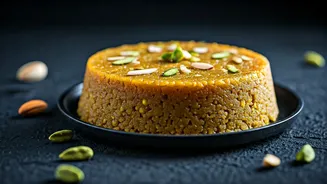
The final touches can elevate your moong dal halwa to an even higher level. Garnish the halwa with your favorite nuts, such as almonds, cashews, or pistachios, either roasted or raw, to add texture and visual appeal. Saffron strands soaked in warm milk can also be drizzled over the halwa for a touch of color and a delicate floral aroma. Serve the halwa warm, as it is best enjoyed immediately after it is made. Storing the halwa in the refrigerator may cause it to become slightly harder; however, reheating it gently can restore its soft texture. Properly made moong dal halwa, with its rich flavor and delightful texture, is a treat that brings immense satisfaction, making it a perfect dessert for any occasion.