






A Tapestry of Senses
The initial encounter with the Banaras ghats is an overwhelming sensory immersion. Narrow, winding alleys lead unexpectedly to expansive steps descending
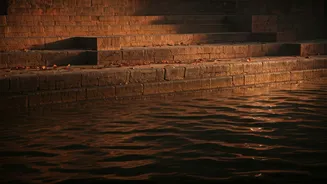
towards the sacred Ganga. The air is perpetually filled with a symphony of distant bells, while the subtle aroma of incense weaves through the atmosphere. As daylight shifts, the river's hue transforms dramatically, transitioning from a soft, pale gold at sunrise to a deep, coppery tone as dusk settles. The early morning hours on the ghats exude a profound sense of peace, with priests reciting prayers, early risers quietly entering the water, and boatmen diligently preparing their traditional wooden vessels for the day ahead. Conversely, as evening approaches, the same riverfront bursts into a vibrant spectacle. The iconic Ganga Aarti ceremony at Dashashwamedh Ghat commences, marked by the ascent of lamps and the resonant echoes of chants, creating an immersive experience of collective devotion amplified by rhythmic displays of fire and music.
A Culinary Journey
Banaras is as renowned for its spiritual depth as it is for its delectable street food, forming an integral part of its identity alongside its ancient temples and the sacred river. Morning meals often consist of local favorites like kachori sabzi and choora matar, while the city is equally celebrated for its rich, multi-layered Banarasi paan and a diverse array of flavorful snacks. To truly experience the city's rhythm, it's advisable to eat early and simply, allowing the local pace to guide your culinary exploration. A typical day might involve savoring a kachori sabzi for breakfast, enjoying a refreshing lassi to combat the midday heat, indulging in a paan after a leisurely walk, and sampling some chaat in the evening, thereby weaving yourself into the authentic Banaras experience.
Whispers of Wisdom
Beyond its visual and gustatory appeal, Banaras leaves a lasting impression through its inhabitants' contemplative nature. The city is populated not just by tourists, but by locals who observe life with a distinct attentiveness. Whether they are boatmen, priests, street vendors, students, or long-time residents, they often speak with a tranquil certainty that feels increasingly rare in today's fast-paced world. Their conversations are imbued with practical wisdom, whether discussing the river, the weather patterns, local customs, the bustling crowds, or the evolving urban landscape. These insights are rarely presented as formal lessons; instead, they surface organically, perhaps in a narrated anecdote about the Ganga, or a thoughtful reflection on the passage of time, the nature of faith, or the virtue of patience. This profound understanding is cultivated through decades of intimate coexistence with the place's inherent rhythms, offering a unique perspective rarely found elsewhere.
The Ancient Riverfront
Banaras, also known as Varanasi, possesses a remarkable ability to quiet the mental chatter. Its riverfront extends for approximately 6.5 kilometers, a continuous line of ghats that serve as more than mere access points to the Ganga. They are dynamic stages where devotion, daily labor, expressions of grief, ingrained routines, and joyous celebrations coexist. Recognized by UNESCO as one of the world's oldest continuously inhabited cities, Varanasi places its ghats at the very core of its cultural and spiritual fabric. Consequently, visitors often depart feeling not just as though they've visited a destination, but as if they've witnessed a philosophy in action. Here, the dualities of existence – life and mortality – are presented side-by-side. Pilgrims descend for ritual cleansing, families gather for prayer, boatmen await their next fare, ascetics find moments of profound stillness, and vendors call out their wares across the water. The Ganga holds immense sacred significance in Hindu traditions, and its riverfront has historically been linked to bathing, worship, and cremation rituals. This seamless integration of the sacred and the mundane is what imbues the city with such profound emotional resonance, even for those who arrive without any specific spiritual agenda.
Navigating Your Visit
To make the most of your time at the ghats, comfortable footwear is essential, as the steps and lanes are best explored on foot rather than rushed. It is also advisable to carry minimal valuables and dress modestly when visiting religious sites. For the spectacular Ganga Aarti, arriving early will help secure a good vantage point, or consider watching the ceremony from a boat to avoid denser crowds. When the city naturally encourages a slower pace, embrace it. Banaras is not a destination to be quickly 'covered,' but rather one to be deeply absorbed. Ultimately, visitors often find that Banaras subtly reshapes their perspective by presenting the intertwined realities of devotion and death. This confrontation serves as a poignant reminder of life's transient yet deeply meaningful nature. Observing the city's rituals and contemplative moments along the river typically fosters a heightened appreciation for the preciousness of time and life itself.
Embracing the Dawn
Begin your exploration of Banaras early in the morning, as the city often reveals its most serene and beautiful aspect before it fully awakens. A sunrise boat ride offers an unparalleled panoramic view of the ghats, providing a calmer and less crowded atmosphere. Official tourism resources highlight boat rides as a quintessential Banaras experience, and for good reason. From the water, the city unfolds as a vast, living riverfront, offering a more cohesive perspective than the often perceived chaotic network of steps and narrow passages. Avoid rushing your walks through the ghats; the authentic essence of Banaras often resides in the spaces between the well-known landmarks. Dedicate time to Assi Ghat for its gentle, youthful ambiance and morning spiritual sessions, proceed towards Dashashwamedh for the captivating evening ceremony, and approach Manikarnika Ghat with profound respect, acknowledging its significance as a cremation site steeped in deep religious meaning. Even a brief stroll between adjacent ghats will reveal how each distinct space embodies the city's soul in a unique manner.
Life and Endings
Perhaps the most transformative realization for many visitors occurs when they witness how naturally Banaras integrates life and death. At certain ghats, the perpetual presence of cremation fires serves as a stark, yet accepted, acknowledgment of mortality, rather than an attempt to conceal it. Just a short distance away, scenes of children at play, pilgrims engaged in prayer, boats gracefully traversing the water, and everyday life unfold. For numerous visitors, this proximity to the cycle of life and death fundamentally shifts their outlook. Death begins to feel less like an abstract dread and more like an inherent phase within the broader continuum of existence. Observing these rituals along the river frequently prompts introspective contemplation on impermanence, the ultimate purpose of life, and what truly holds significance. In a peculiar way, confronting the reality of life's finite nature can enhance the vividness and meaning of the present moment. Standing at these ancient ghats, individuals often gain a profound awareness of life's fragility and brevity. The constant, gentle reminder of endings elevates the value of everyday experiences – conversations with loved ones, time spent with friends, even the simple act of watching the river flow. This quietly reorients priorities. Many depart with the understanding that life should not be perpetually deferred or solely occupied by anxieties and routine. Instead, it serves as a powerful impetus to cherish time, express affection more openly, and refrain from postponing endeavors that are genuinely meaningful. In the shadow of these time-honored ghats, the imperative to live a fulfilling life becomes strikingly clear.