






Rest Reimagined
The way we perceive rest has undergone a significant transformation. Previously, even moments of repose were often framed with justifications, such as needing
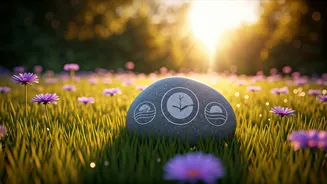
to recover from exhaustion or having diligently completed a week's work. This mindset implied that rest was a reward, something to be earned through arduous effort. However, a quiet revolution is underway, particularly evident on social media with the emergence of 'bed rotting.' This seemingly whimsical term signifies a profound shift towards openly discussing and practicing idleness. It's about dedicating time to simply be, to relax the body and mind without the pressure of productivity, challenging the notion that every waking moment must be filled with purposeful activity.
The Racing Mind
For many, 'bed rotting' is not about laziness but about finding respite from a mind that is constantly in overdrive. Decades of relentless digital engagement—constant notifications, looming deadlines, societal expectations, and an unending influx of information—have trained our brains to remain in a perpetual state of alertness. Even after the workday concludes, the mental gears often refuse to disengage. Phones remain close companions, work-related communications can spill into personal time, and social media incessantly showcases others' achievements, fostering a sense of perpetual inadequacy and pressure to keep striving. This constant stimulation prevents the nervous system from fully relaxing, leading to a state where one is technically resting but mentally still processing, checking, and reacting, a phenomenon psychologists describe as an incompletely relaxed state.
The Body's Pushback
When the mind refuses to quiet down, the body eventually signals its distress. This manifests as a peculiar form of exhaustion that even ample sleep cannot fully alleviate. This exhaustion isn't necessarily a result of more intense physical labor compared to previous generations; rather, it stems from the chronic lack of mental silence. In earlier times, opportunities for natural pauses and quiet reflection were more abundant. These included moments of waiting without digital distractions, sitting outdoors after dinner, or taking a walk without auditory input. Such periods served as micro-resets for the brain, allowing it to decompress. Today, however, these spontaneous gaps are rapidly filled. The instant boredom arises, the phone is typically the go-to solution, effectively eliminating these crucial mental breathing spaces.
Beyond Wellness Routines
The current conversation around rest feels distinctly different from previous wellness trends. Instead of attempting to transform rest into another structured activity or routine, people are now prioritizing the creation of genuine mental space. This involves activities like simply lying down without a predetermined goal, sitting in quiet contemplation, or taking a walk purely for the sake of movement, not as a calorie-burning exercise. These practices may not appear impressive or garner attention on productivity platforms or motivational feeds, yet they are increasingly recognized as essential for well-being. The prevailing 'hustle culture' had long propagated the idea that inactivity was a wasted opportunity and that success was reserved for those who maximized every hour with effort. However, this perspective fails to acknowledge the fundamental nature of the human mind, which requires pauses—not the carefully optimized kind, but moments where no performance is expected.
Relearning True Rest
The prevailing narrative for years, driven by hustle culture, equated doing nothing with a waste of valuable time, suggesting that true success belonged only to those who relentlessly filled every hour with effort. This ethos painted a picture where productivity was paramount, and any deviation was seen as a failure. However, the human mind operates fundamentally differently from a mechanical device. It necessitates periods of genuine downtime. These are not the 'optimized' breaks designed to boost efficiency for more work, but rather unstructured moments where there is no expectation of output or achievement. This skill of embracing unadulterated rest is what many individuals are now quietly rediscovering and actively practicing. It's a conscious unlearning of the constant drive for productivity and a relearning of the simple, yet profound, art of being still.