




Lunar Scout Swarm Deploys
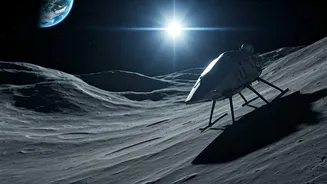
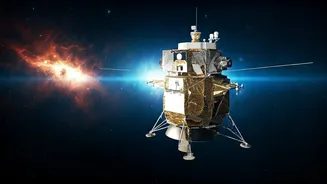
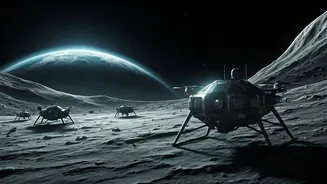
NASA is orchestrating a pioneering initiative, the MoonFall Project, which involves dispatching a synchronized group of advanced autonomous drones to the moon's
challenging south polar region. These aren't ordinary aerial vehicles; they are specialized 'hoppers' engineered to traverse the moon's rugged surface. The overarching objective, led by Ray Baker at JPL, is for each drone to cover an impressive distance of approximately 50 kilometers, with a target completion date set for the end of 2028. This sophisticated scouting mission aims to gather extensive data and detailed topographical information, ensuring that future human missions, like the Artemis program, will have a comprehensive understanding of the lunar terrain before astronauts even arrive, thereby enhancing safety and planning capabilities.
Mars Tech Inspires Leap
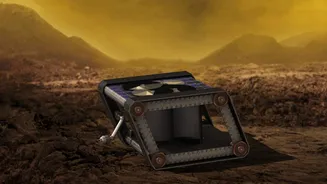
The development of the MoonFall drones draws heavily upon the invaluable experience gained from NASA's Ingenuity helicopter, which achieved remarkable success with 72 flights on Mars. Project leaders are leveraging the technological advancements and operational knowledge acquired from Ingenuity, integrating it with the agility and innovation characteristic of the private space industry. This synergistic approach allows for a more efficient and accelerated development process. By combining NASA's established expertise in space flight with the rapid advancements and capabilities present in the burgeoning private space sector, the MoonFall Project aims to achieve its ambitious goals more swiftly and effectively than traditional government-led initiatives alone. This collaboration is crucial for maximizing resources and fostering innovation.
High-Definition Lunar Mapping
To meticulously map the lunar landscape, each of the four drones will be equipped with an array of ten sophisticated cameras, totaling forty cameras across the entire swarm. This extensive imaging capability, coupled with various scientific sensors, will capture the moon's surface in unprecedented detail. The images collected will be meticulously stitched together to create a high-resolution, comprehensive map. This detailed mapping is absolutely critical for two primary reasons: ensuring the safety of future Artemis astronauts by identifying secure landing zones, and aiding in the strategic planning and construction of the initial permanent lunar base infrastructure. This detailed visualization is a cornerstone for future lunar habitation and operations.
Smart Navigation Systems
Mirroring the intelligent design principles of the Ingenuity helicopter, which utilized electronics akin to those found in smartphones, the MoonFall drones are built with advanced self-reliance. They incorporate sophisticated hazard detection systems that enable them to make real-time decisions in dynamic environments. As the drones transition between locations, they continuously scan the ground beneath them. Upon approaching a new site, each drone will independently assess the surrounding area and select the safest possible spot to land. This autonomous decision-making process is vital for mission success, ensuring that the drones can navigate and operate effectively even in the most unpredictable and treacherous lunar terrains, minimizing risks and maximizing operational uptime.
Expedited Mission Timeline
The MoonFall Project is being advanced with remarkable speed to meet its ambitious objectives. A critical early step involves the selection of private industry partners who will contribute to building and managing the drone fleet, with a target selection date of June of the current year. While contractual agreements are being finalized, the foundational hardware for the drones is already in development or assembly. The project is progressing through key testing phases: 'captive carry' tests are slated for late 2026 to validate sensor functionality, followed by final spacecraft assembly and rigorous testing in the summer of 2027. The drones are then scheduled for delivery to the launch site in 2028 for their journey to the lunar south pole. This accelerated timeline, while demanding, reflects the project's focus on efficiency and rapid deployment.
Cost-Effective Exploration
A significant aspect of the MoonFall Project is its strategy to reduce the financial burden of lunar exploration. While precise budget figures are still under review, NASA's approach prioritizes efficiency and leverages external capabilities. A key cost-saving measure is the drones' deployment method. Instead of utilizing complex and expensive dedicated landing systems for each drone, they will be released from a mothership during descent. This mid-air release significantly cuts down on the engineering challenges and costs associated with soft lunar landings. Furthermore, NASA is adopting a managerial role, relying on the private space industry for crucial components like transfer, braking, and propulsion systems. This partnership model minimizes financial risk, allows for the utilization of existing commercial technologies, and has the potential to increase mission frequency within a given budget, demonstrating a smarter approach to exploring the Moon.