




Rinse Under Water
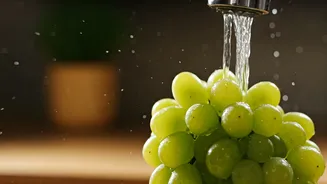
Begin by placing your grapes in a colander, then subject them to a steady stream of running water for approximately thirty seconds. Gently agitate the grapes with
your hands while rinsing. This initial step is crucial for dislodging loose dirt, dust particles, and a substantial amount of surface-level pesticide residue, setting the stage for deeper cleaning.
Salt Water Soak
Prepare a cleansing bath by mixing a teaspoon of salt into a bowl of water. Submerge your grapes in this saline solution for a duration of ten to fifteen minutes. The salt acts as an osmotic agent, helping to draw out impurities and any lingering pesticide traces from the grape skins. Following the soak, it's essential to rinse the grapes thoroughly again under clean running water to remove all salt and loosened contaminants.
Baking Soda Solution
Another highly effective natural cleaner involves a baking soda solution. Combine one teaspoon of baking soda with a bowl of water and allow the grapes to soak for about fifteen minutes. Baking soda possesses remarkable properties that aid in breaking down various pesticide residues. After the soaking period, ensure a comprehensive rinse under fresh running water to remove any trace of the solution and prepare the grapes for eating or safe storage.
Vinegar Wash
For a dual action of cleaning and sanitizing, try a vinegar soak. Create a mixture of one part vinegar to three parts water. Let the grapes steep in this solution for a period of ten minutes. Vinegar is effective not only in reducing pesticide traces but also in combating common bacteria. It is imperative to rinse the grapes extensively afterwards to eliminate any residual vinegar taste, ensuring they are palatable before consumption or refrigeration.
Gentle Rubbing
In conjunction with soaking methods, a manual approach can significantly enhance cleanliness. While washing, take a moment to gently rub each individual grape between your fingers. This gentle friction is adept at loosening and removing any stubborn residue, waxes, or adhering pesticides that might resist simple soaking. This tactile step ensures a more robust and effective overall cleaning process.
Double Rinsing
Regardless of the cleaning solution employed—be it salt, baking soda, or vinegar—a thorough double rinse is non-negotiable. After any soaking or washing procedure, rinse your grapes at least twice under a strong stream of running water. This crucial step guarantees that any loosened pesticides and residual cleaning agents are completely washed away, leaving the grapes pristine, fresh, and entirely safe to enjoy.
Drying Process
Once your grapes have been thoroughly washed and rinsed, it’s vital to dry them properly. Spread the cleaned grapes out on a clean kitchen towel or cloth and gently pat them dry. Removing excess moisture is critical for preventing bacterial proliferation and maintaining their freshness. Proper drying also ensures that no lingering cleaning solutions remain on the grape skins before they are stored or consumed.
Proper Storage
After your grapes have been cleaned and dried to perfection, it’s time for optimal storage. Place them in a breathable container and keep them refrigerated. It's advisable to avoid sealing them in airtight containers while still damp, as trapped moisture can accelerate spoilage. Correct storage post-cleaning is key to preserving their freshness and preventing any potential contamination until you're ready to savor them.