






A Serene Enclave's Genesis
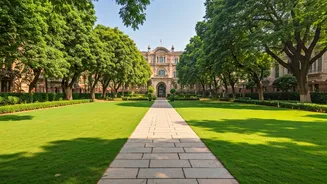
Nestled in the heart of South Delhi, Jor Bagh emerges as a pocket of calm, a stark contrast to the city's usual hustle. Upon entering, one is immediately
struck by the tree-lined avenues and the prevalent greenery, with most residences boasting views of expansive parks, a characteristic that locals proudly identify as the neighborhood's prime luxury. This upscale residential area, established in the decades following India's independence, primarily during the 1950s and 1960s as the capital city underwent significant expansion beyond the Lutyens' Delhi framework, rapidly ascended to become one of the capital's most distinguished locales. Its name is thought to originate from a nearby historical tomb complex dating back to the Mughal era, lending an air of historical depth to its serene ambiance. Conceived as a low-density residential zone, Jor Bagh soon became the favored abode for senior government officials, diplomats, politicians, and accomplished professionals, drawn by its quietude and prestigious address. While the passage of time has seen some older bungalows replaced by contemporary low-rise apartment buildings, the area has largely retained its distinguishing features: broad, well-maintained roads, abundant green cover, and a pervasive sense of peaceful residential living, successfully navigating the inevitable urban transformations.
Enduring Charm and Evolving Landscape
The narrative of Jor Bagh is deeply personal for many, including its RWA President, Anmol Khanna, who has witnessed its transformation over three and a half decades. Having moved into the area during his second year of college, he recalls Jor Bagh evolving from a quiet government-dominated enclave into one of Delhi's most desirable residential destinations. The colony is home to approximately 233 houses, with a significant number of families having resided there for over 70 years. Khanna emphasizes that much of the original charm persists, with lush greenery still defining the landscape. He fondly remembers the remarkable cleanliness of the area in earlier times, coupled with significantly fewer vehicles on the road, contributing to a well-managed and strong sense of neighborhood belonging. Today, Jor Bagh continues to be regarded as an excellent place to live. The abundant greenery and park-facing homes remain key attractions, preserving the coveted sense of calm. However, the increased number of vehicles has introduced parking challenges. The RWA is actively engaged in pioneering efforts to establish Jor Bagh as a zero-waste neighborhood within Lutyens Delhi, underscoring a commitment to sustainability. What has remained remarkably consistent is the robust social cohesion; residents, who were united in the past, continue to come together for festivals and community functions. Yet, the advent of the builder-floor concept has undeniably placed additional strain on the neighborhood's infrastructure.
Connectivity Meets Tranquility
Despite its relaxed atmosphere, Jor Bagh occupies a strategically advantageous position at the core of the capital, ensuring exceptional accessibility. Major arterial roads such as Aurobindo Marg and Lodhi Road provide swift connections to central and southern parts of Delhi. Furthermore, the Jor Bagh metro station, a vital transit point, facilitates effortless travel to key destinations along the Yellow Line, including prominent areas like Connaught Place, Hauz Khas, and Gurgaon. Residents consistently cite this uncommon amalgamation of peaceful residential living and strong transportation links as a primary driver behind the neighborhood's sustained high demand. This unique combination allows individuals to enjoy a tranquil home environment while remaining well-connected to the city's commercial and cultural hubs. The ability to retreat to a quiet, green space after a busy day, with the convenience of reaching central business districts or entertainment zones within minutes, presents a compelling lifestyle proposition that few other localities can match.
Addressing Evolving Challenges and Aspirations
While Jor Bagh largely presents an idyllic picture, the pressures associated with a rapidly evolving urban environment have begun to manifest. The increasing vehicular population has exacerbated the scarcity of parking spaces, and the trend towards constructing builder floors has amplified the demand on existing local infrastructure. In response, the Residents' Welfare Association (RWA) is actively pursuing initiatives, including the ambitious goal of transforming Jor Bagh into a zero-waste neighborhood. The enduring strength of the community spirit remains a cornerstone, with residents continuing to unite for celebrations and events, a testament to the deep-rooted social cohesion. However, not all aspects of the neighborhood are perceived as perfect. Jyoti Pande, a resident for the past three years, points out that certain civic amenities require urgent attention. Given the high concentration of educated and accomplished individuals—diplomats, high-net-worth individuals, politicians, top legal professionals, and other experts—expectations for superior civic services are naturally elevated. She believes that despite its prime location and considerable potential, consistent improvement across various aspects is necessary. Specific concerns include the lack of consistent waste segregation and on-site composting, persistent potholes and unrepaired dug-up areas, deteriorating road surfaces, and the ongoing issue of stray dogs, which have unfortunately led to instances of residents being bitten. Park maintenance also leaves room for improvement, with ad-hoc planting contributing to a sense of disorder. The RWA has reportedly communicated these concerns to the local deputy chief minister and the New Delhi Municipal Council (NDMC) since September, but has yet to receive a response, highlighting a need for greater responsiveness from civic authorities to realize the colony's full potential.