





Understanding Solar Winds
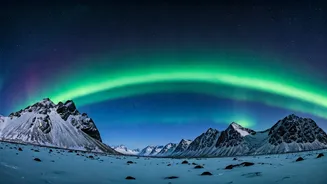
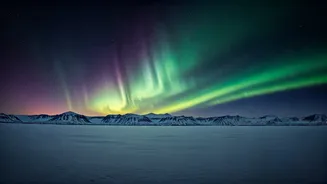
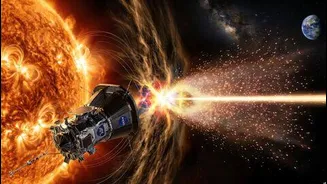
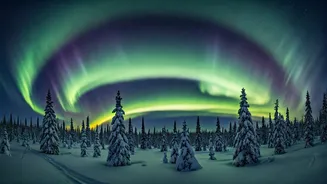
The aurora borealis, or Northern Lights, is a breathtaking natural light show that captivates observers across the globe. Its appearance is intricately
linked to the Sun's activity, specifically the stream of charged particles it constantly emits, known as solar wind. This solar wind isn't uniform; it can vary in speed and density. When the Sun has large coronal holes, which are cooler, darker regions in its atmosphere, it can lead to faster and more sustained solar wind streams. These faster streams are crucial for generating geomagnetic storms. The frequency of these energetic particle releases dictates the likelihood and intensity of aurora displays. For instance, dates with mentions of "fast solar winds" or "coronal holes" often correlate with increased chances of aurora sightings. Understanding these basic solar wind dynamics is the first step in predicting when and where the aurora might be visible. It's a dynamic interplay between our star and our planet's atmosphere.
Coronal Mass Ejections (CMEs)
Beyond the steady flow of solar wind, the Sun can unleash much more dramatic events known as Coronal Mass Ejections, or CMEs. These are massive bursts of plasma and magnetic field from the Sun's corona. When a CME is directed towards Earth, it can significantly enhance the chances of seeing the aurora. The arrival of a CME can trigger powerful geomagnetic storms, which are disturbances in Earth's magnetic field caused by the interaction with the CME's charged particles. The strength of these storms is often categorized using scales like the G-index, with G3 indicating strong storms and G4 or G5 representing severe conditions. These more potent events have the potential to push auroral displays much further south than usual, making them visible to a wider audience. Reports mentioning "CME impact detected" or "incoming CME" are strong indicators that aurora activity is likely to increase.
Geomagnetic Storms and Aurora Intensity
The direct collision of solar wind particles or CMEs with Earth's magnetosphere initiates geomagnetic storms. These storms are the primary drivers of the aurora. The intensity of these storms, often classified on a scale from G1 (minor) to G5 (extreme), directly influences how vibrant and widespread the auroral displays will be. Minor geomagnetic storms (G1-G2) typically confine auroras to high latitudes, observable only in regions closer to the Arctic Circle. However, stronger storms (G3 and above) can push the aurora's visibility much further south, sometimes even to mid-latitudes. Dates flagged with "G3 levels reached," "strong geomagnetic storm in progress," or "severe G4 geomagnetic storm conditions" are prime times for aurora hunting. The mention of "elevated geomagnetic conditions" suggests a higher probability of seeing the lights, even if they are not as intense as during a severe storm.
Reading Aurora Forecasts
Predicting aurora visibility involves understanding various space weather indicators. Aurora forecasts often consider the speed and density of solar winds, the likelihood and direction of CMEs, and the predicted strength of geomagnetic storms. Keywords like "elevated aurora conditions," "minor geomagnetic storms," or "unsettled conditions" signal increased chances. Conversely, phrases such as "quiet skies," "activity waning," or "auroras retreat north" indicate lower probabilities. Forecasts also frequently mention the geographical range of expected sightings, distinguishing between high-latitude visibility and potential for mid-latitude displays. For example, a forecast might state "auroras possible at high latitudes tonight" or "northern lights could dazzle tonight as solar storm heads for Earth." Staying updated with these forecasts is key for any aurora enthusiast.
When to Chase the Lights
Maximizing your chances of witnessing the aurora involves strategic planning. While auroras can occur at any time, certain conditions significantly increase their likelihood. Look for forecasts indicating increased solar wind speed, incoming CMEs, and predicted geomagnetic storms, especially those reaching G2 levels or higher. Dates with announcements like "Aurora alert: Thanksgiving northern lights could delight tonight" or "Incoming CME could spark northern lights as far south as New York" are excellent opportunities. Additionally, clear skies are, of course, essential. While auroras can occur year-round, the darker months, particularly during periods of high solar activity, generally offer better viewing conditions. Observing during periods of "elevated conditions" or when "active geomagnetic conditions persist" are good bets for an unforgettable celestial spectacle.