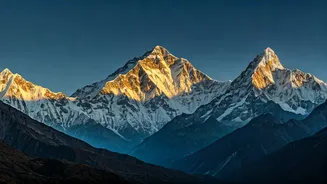








The Golden Glow
Kanchenjunga, India's loftiest mountain and the third-highest globally, is an iconic feature of the Eastern Himalayas, straddling the border between India and Nepal.
Its striking nickname, 'Golden Mountain,' isn't derived from precious metals but from the spectacular visual phenomenon observed at sunrise and sunset. As the sun's low-angle rays strike the colossal, snow-covered summits, the ice and snow refract light, transforming the peak into a radiant spectacle of warm gold, amber, and copper hues. This ethereal glow, as if momentarily bathed in molten gold, is particularly vivid and best appreciated from vantage points like Darjeeling, Sikkim, and the northern regions of Bengal. For centuries, before the advent of photography or widespread tourism, local populations have marveled at this daily display, imbuing the mountain with a sense of profound majesty and near-sacred status in their cultural consciousness.
Meaning and Legends
The name 'Kanchenjunga' originates from Tibetan, translating to 'The Five Treasures of the High Snow.' This name carries deep symbolic weight, representing not just gold, but also silver, precious gems, vital grain, and sacred texts, highlighting the mountain's immense value and importance. In the spiritual traditions of Sikkim and Tibet, Kanchenjunga is revered as a powerful guardian deity. This reverence is so profound that local customs dictate that disturbing the mountain can invite misfortune. Consequently, climbers often adhere to this tradition by concluding their ascent just short of the absolute summit, paying homage to the mountain's sacred status and the beliefs of the people who live in its shadow. The mountain stands at an imposing height of 8,586 meters, solidifying its position as India's highest peak and one of the world's most challenging natural wonders.
Broader Golden Peaks
While Kanchenjunga undeniably commands the title of India's 'Golden Mountain,' the phenomenon of mountains catching warm golden light at dawn is not exclusive to it. Other prominent Himalayan peaks, such as Nanda Devi and Dhaulagiri, also exhibit this breathtaking transformation. As the sun's early rays kiss their snow-capped crowns, these giants are similarly enveloped in beautiful golden tones, creating spectacular morning vistas that captivate observers. This shared characteristic emphasizes the profound connection between light, snow, and mountain grandeur in the Himalayas, offering a consistent display of natural beauty across different towering landscapes.