



Mimicking Nature's Ingenuity
The field of biomimicry, where designs and processes from nature are emulated, has become increasingly important in space exploration. For instance, the
streamlined shapes of fish have inspired the design of spacecraft to reduce drag and improve maneuverability. Scientists study the scales of certain fish to understand how they can self-heal, a concept being considered for spacecraft that may need to repair damage from micrometeoroids. The way marine animals navigate complex underwater environments is also being studied to develop more reliable guidance systems for spacecraft operating in the absence of GPS.
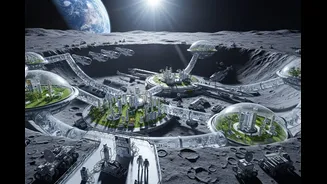
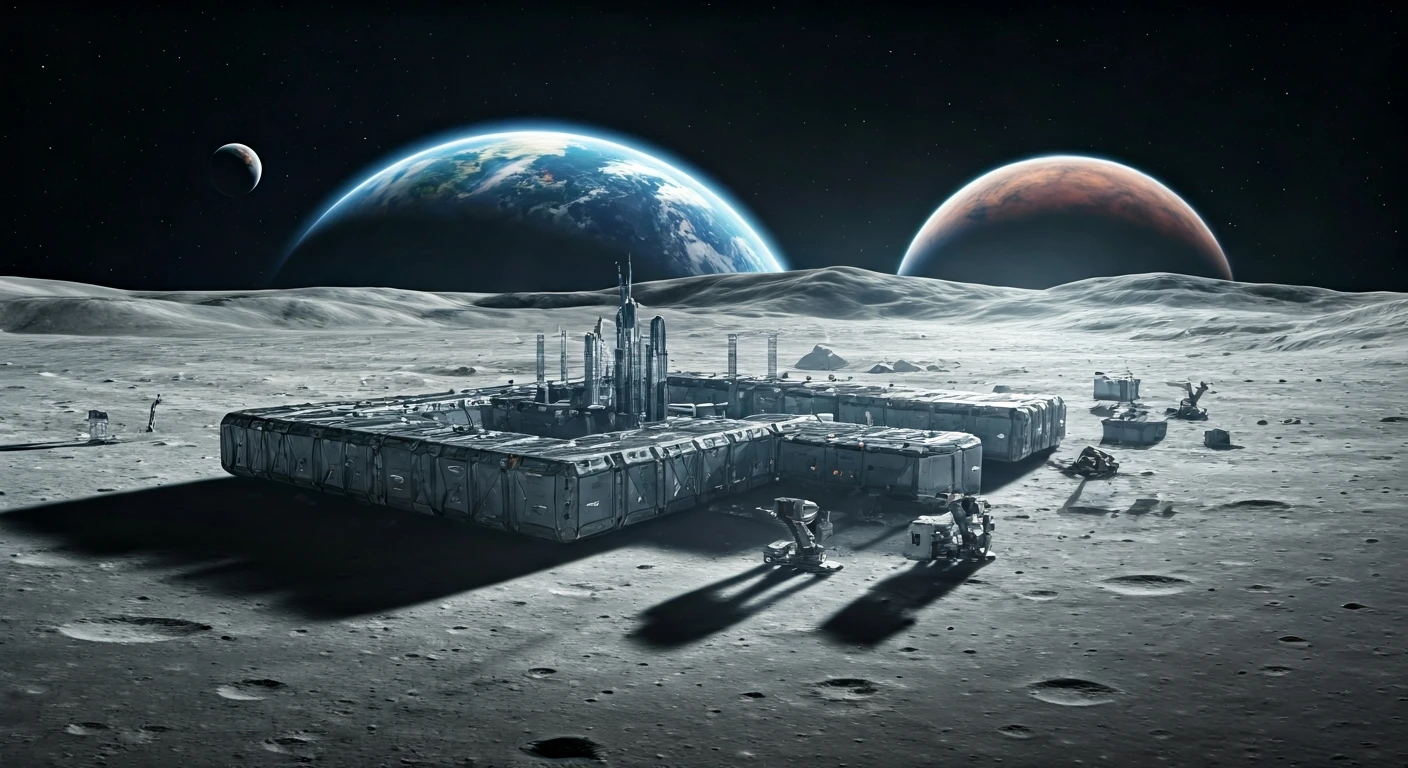
Underwater Habitats in Space
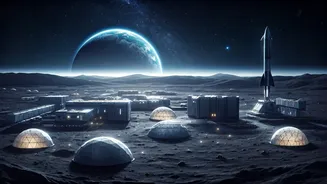
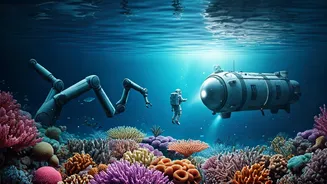
The concept of building habitable environments in space has significant parallels with underwater living. Both environments present challenges related to pressure, resource management, and life support. Underwater habitats provide valuable practice for space missions. The Aquarius Reef Base, a unique underwater research station, has served as a training ground for astronauts. Here, they can simulate the constraints of space by managing limited resources, conducting complex experiments, and experiencing extended periods of isolation. The lessons learned in underwater habitats assist in the development of closed-loop life support systems for long-duration space travel, including recycling water and managing waste.
Fish-Inspired Space Suits
The design of space suits has been significantly influenced by the study of aquatic creatures. The pressurized suits must provide astronauts with mobility while maintaining a stable environment. The protective features of certain fish, such as the ability to withstand extreme pressures and maintain internal stability, have inspired innovative suit designs. Engineers have studied the natural buoyancy control mechanisms of fish to improve the maneuverability and efficiency of space suits. Moreover, the material properties of fish scales are being examined for use in protective layers of space suits, possibly providing greater protection against radiation and impacts. The research constantly aims to create space suits that are both robust and flexible, similar to the adaptations seen in aquatic life.
Aquatic Propulsion Systems
The methods by which fish propel themselves through water are being studied for improvements to spacecraft propulsion. The efficient swimming techniques of fish, such as the movement of their fins and bodies, have influenced the development of new thruster designs. Scientists are exploring ways to mimic the undulating motion of fish tails to create more efficient propulsion systems for small satellites and spacecraft. These systems aim to allow for greater maneuverability and fuel efficiency. Innovations in this area may offer advantages for orbital adjustment and exploration. The study has led to novel ways of thinking about thrust and propulsion, drawing inspiration from natural systems.
Resource Management Inspiration
The ability of fish to survive and thrive in resource-limited aquatic environments offers valuable lessons for managing resources in space. Fish have adapted to efficiently use oxygen and recycle nutrients, which have led to innovative strategies for life support systems in space. Scientists are looking at how fish filter and process waste products to develop advanced recycling systems for spacecraft. This approach reduces the need to carry large quantities of resources on long missions. The focus is on creating closed-loop systems that allow spacecraft to sustain life using minimal resources. This is particularly important for missions venturing far beyond Earth, where resupply will be challenging.