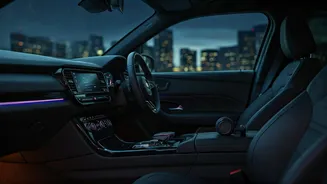







The Car as Sanctuary
For many, a vehicle transcends its function as mere transportation, evolving into a personal haven where the clamor of everyday existence fades. Actor
Gurmeet Chaudhary recently shed light on this profound connection, articulating how automobiles frequently become vital emotional sanctuaries, particularly for men. Speaking in an interview while piloting his Mercedes, Chaudhary shared his deeply personal bond with his car, stating, “This space is very close to my heart. Here I get disconnected with the world.” This sentiment is echoed by Dr. Anitha Chandra, a Consultant in Psychiatry, who explains that this psychological safety stems from the car being one of the rare environments where an individual can be entirely alone without facing scrutiny. The enclosed nature, familiarity, and sense of control within a car diminish the fear of judgment, creating an atmosphere conducive to emotional expression and surfacing feelings. Consequently, numerous individuals, much like Choudhary, seek solace and emotional release within their vehicles, finding a unique form of comfort and privacy that is difficult to replicate elsewhere.
Productivity and Solitude
Beyond its role as an emotional retreat, Chaudhary also utilizes his car as a mobile workspace. He described how he transforms his car into an impromptu office, complete with coffee, to tackle work-related tasks such as important calls, script reading, and follow-ups. He further elaborated that the selection of his car's "office" location is often dictated by the scenic view, highlighting a deliberate choice to enhance his working environment. Dr. Chandra supports this, explaining that the privacy afforded by a car is instrumental in emotional decompression. When emotions are stifled during professional or social engagements, they naturally seek a safe outlet, and the uninterrupted solitude of a car facilitates this, making it easier to cry or simply unwind. Interestingly, Chaudhary doesn't necessarily associate this escape with extended journeys; often, he prefers to drive around his neighborhood, park the car for an hour or two, put on headphones, and enjoy a coffee. During this period of stillness, he achieves a level of focus that he finds unattainable in his home or any traditional office setting, underscoring the unique cognitive benefits of this personal space.
Psychology of Neutrality
Dr. Chandra further elaborates on the psychological underpinnings of why cars serve as such effective spaces for both emotional release and enhanced productivity. She posits that unlike home environments, which are inherently tied to specific roles, expectations, and responsibilities, a car represents a neutral and temporary zone. In this space, no external demands are placed upon the individual, fostering a sense of liberation and emotional freedom. This detachment from societal pressures and personal obligations allows for a more authentic expression of feelings and thoughts. The temporary nature of the car's presence in a particular location, coupled with its inherent neutrality, creates an environment free from the weight of accumulated history or future obligations. This psychological distance is crucial for individuals to process their emotions, engage in focused work, or simply find a moment of peace without the usual constraints that their established personal or professional spaces impose upon them, leading to a renewed sense of clarity and focus.
Gendered Emotional Outlet?
Choudhary articulated a belief that this unique bond with cars is particularly pronounced for men, suggesting, "There would be hardly any males who haven’t cried in their cars." This perspective implies that cars serve as a distinctively male-coded space for vulnerability. While crying in a car can indeed be a therapeutic release, aiding in the expulsion of accumulated stress and emotional pressure, Dr. Chandra offers a broader psychological viewpoint. She contends that this emotional need for privacy and release is not exclusive to men; women experience it equally. The difference in expression, she suggests, might be rooted in societal conditioning, where men are perhaps more conditioned to express such vulnerability in a private setting like a car due to broader societal discouragement of overt emotional expression elsewhere. Ultimately, Dr. Chandra emphasizes that emotional needs are fundamentally human and not inherently gender-based, advocating for a universal understanding of the therapeutic benefits of having a private, non-judgmental space for emotional processing, regardless of gender.