






Origins and Evolution
The origins of Rio Carnival trace back to 1723, with the arrival of Portuguese settlers who introduced the lively Entrudo festival. Originally, this celebration
was marked by food fights, lively music, and street festivities. As time passed, the fusion of European traditions with African influences laid the groundwork for the uniquely Brazilian Carnival we know today. This rich blend of cultures has fostered a vibrant atmosphere that has attracted people from around the world. The early 20th century witnessed a transformative introduction: Samba. African-Brazilian communities pioneered Samba, fundamentally changing Carnival. Informal street dancing evolved into organized competitions, resulting in the grandeur of today's Sambadrome parades.
Beyond the Sambadrome
Carnival's appeal expands far beyond the Sambadrome, spilling into Rio’s streets. The city comes alive with famous blocos (street parties), beach parties on Copacabana, and even tunnel raves, ensuring nonstop celebrations day and night. The unique charm of each neighbourhood creates a citywide celebration. Every corner of Rio showcases a piece of the Carnival spirit. The numerous blocos offer diverse musical styles and themes. Copacabana beach becomes a hub of music, dance, and revelry. Even the underground tunnels transform into party venues, providing an alternative experience for attendees, further expanding the appeal and variety of Carnival.
Samba's Transformation
The early 20th century marked a pivotal moment when African-Brazilian communities introduced Samba. This transformation changed Carnival forever. What had begun as spontaneous street dancing evolved into the organised competitions seen today. The parade at Rio’s Sambadrome showcases elite samba schools, competing through themed performances that are assessed on their musicality, choreographic skills, and storytelling. Samba schools are the heart of the Carnival, with each school presenting a themed narrative through their music, dance, and costumes. The competitions, which take place at the Sambadrome, are the most famous events of the carnival.
Rio: The Epicenter
While Carnival happens throughout Brazil, Rio de Janeiro remains its undeniable heart. It is the place where the festival comes to life. With its Afro-Brazilian themes, legendary samba performers, a global crowd, and non-stop energy, the Rio Carnival is a cultural phenomenon. Drawing over 2 million people each year, the festival transforms the city into a nonstop spectacle. The Carnival also allows locals to show their cultural pride and engage in community bonding. Carnival is a period of indulgence before Lent in the Catholic calendar and is a time of expression for both locals and travelers.
Costumes and Symbolism
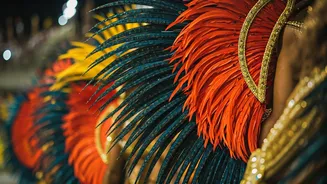
Carnival costumes are much more than mere attire; they are expressions of identity and symbols of freedom. Designed with bold, symbolic intent, the costumes are rich in detail, incorporating elements like feathers, sequins, and masks. Masks, in particular, serve to break down social barriers in a society marked by inequalities, allowing individuals to shed everyday identities and partake in communal celebrations through movement, rhythm, and shared joy. This blend of artistry and cultural significance contributes to the Carnival's global appeal.