
Launch and Mission Goals
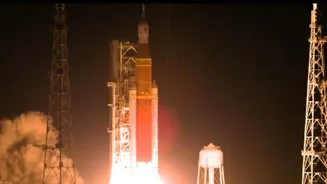
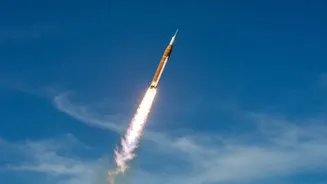
On April 1, 2026, at 6:35 p.m. EDT, the Artemis II mission began its historic flight from the Kennedy Space Center in Florida, marking a momentous occasion
for NASA. This endeavor represents a significant leap forward in human spaceflight capabilities, particularly after a considerable period of focused development. The primary objective of this particular expedition is not to land on the lunar surface, but rather to conduct vital studies of the Moon and its environment. This preparatory phase is essential for gathering the knowledge and testing the systems required for future crewed landings, ultimately aiming to establish a sustained human presence on the Moon.
Meet the Crew
A dedicated team of four highly skilled astronauts is at the helm of the Artemis II mission, representing a collaborative effort between NASA and the Canadian Space Agency. Commander Reid Wiseman leads the crew, responsible for overall mission direction and success. Victor Glover serves as the pilot, tasked with expertly maneuvering the spacecraft. Complementing their roles are Mission Specialists Christina Koch and Jeremy Hansen, who provide crucial support and execute specialized tasks to ensure the mission's objectives are met. Their combined expertise is instrumental in navigating the complexities of this long-duration spaceflight.
The Orion Spacecraft
The Artemis II mission relies on the advanced Orion spacecraft, a state-of-the-art vehicle specifically engineered to ensure astronaut safety and survival during deep space voyages. Orion is designed to withstand the harsh conditions of space, providing a secure and habitable environment for the crew. This sophisticated spacecraft is launched into orbit by the immensely powerful Space Launch System (SLS) rocket. The SLS is recognized as one of the most robust launch vehicles ever developed, capable of propelling Orion and its crew on their journey beyond Earth's orbit. Together, Orion and the SLS represent critical advancements that empower NASA to push the boundaries of space exploration.
Mission Significance
The Artemis II mission holds profound importance for the future of space exploration, serving as a critical testbed for astronaut skills and technological readiness. By undertaking this journey, NASA is meticulously evaluating human performance in deep space, including their ability to interact effectively and accomplish complex assignments far from Earth. This expedition is a pivotal step in preparing for subsequent Artemis missions that aim to achieve human lunar landings. The insights gained from Artemis II will directly inform the strategies and technologies needed to establish a long-term human presence on the Moon, opening up new frontiers for scientific discovery and potential resource utilization.