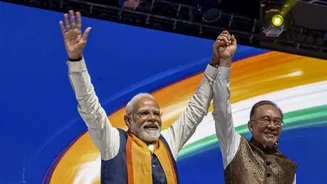

Initial Partnership Overview
The trade partnership between India and the European Union has fundamentally altered the terrain of international commerce. This collaborative venture,
characterized by its scope and ambition, has the potential to reshape established trade routes and redefine economic relationships between nations. The initial agreement represents a commitment to mutual growth and is set to foster unprecedented economic opportunities. Both India and the EU recognized the imperative for enhanced cooperation and decided to forge a closer economic alliance. This partnership aims to dismantle trade barriers, improve market access, and encourage investment flows between the two entities. The initial stages involved extensive discussions and negotiations, resulting in a meticulously crafted framework that underscores shared goals and mutual understanding. This partnership is designed to tackle trade-related hurdles and support sustainable, inclusive development across both regions. The core of the agreement prioritizes increased connectivity and collaboration across different sectors, promoting both tangible and intangible gains. A mutual dedication to achieving economic prosperity and global integration fueled the discussions, which ultimately established the foundation for a renewed, more integrated economic relationship between India and the EU.
Key Agreement Components
Central to the India-EU trade agreement are several key components that define its scope and expected impact. The agreement addresses critical aspects of trade, including tariffs, market access, and intellectual property rights. It aims to reduce or eliminate tariffs on a wide range of goods, which is designed to enhance the competitiveness of businesses in both India and the EU. Furthermore, it focuses on expanding market access by easing regulations and simplifying customs procedures, thereby creating more opportunities for exporters and importers alike. Intellectual property protection forms a pivotal part of the agreement, seeking to safeguard innovations, brands, and creative works, thus fostering creativity and technological advancements. The partnership also covers sectors such as services and investments, with the aim of promoting deeper economic integration. The agreement's impact will be broad, improving the ease of doing business and boosting trade volumes between the two regions. By simplifying procedures, this encourages firms to engage in cross-border trade and helps create a more predictable and transparent environment for all involved. Investment flows will be stimulated, as investors gain confidence in the stability and reliability of the agreement. The agreement's extensive reach is designed to provide substantial advantages for both India and the EU.
Impact on Businesses
The India-EU trade agreement will generate numerous opportunities for businesses across various sectors. The reduced tariffs and enhanced market access will provide a major boost to exporting firms, allowing them to reach a larger customer base with greater ease. This is especially advantageous for small and medium-sized enterprises (SMEs), which will gain improved access to new markets. The reduction of trade barriers also ensures businesses can source materials and inputs at more competitive prices. It boosts productivity and allows firms to optimize their supply chains. The agreement will foster competition, encouraging businesses to improve their goods and services. Foreign direct investment (FDI) inflows are anticipated to rise. This leads to the expansion of companies, the creation of jobs, and technological transfer. Furthermore, the agreement ensures that legal and regulatory frameworks are aligned, offering a predictable and secure environment for businesses to operate. This will contribute to stronger economic growth, enhanced global competitiveness, and will encourage innovation across industries. Businesses involved in manufacturing, agriculture, services, and technology will all see significant advantages from the new agreement.
Consumer Benefits Explained
Consumers in both India and the EU are expected to benefit from the new trade agreement through an expanded selection of goods and services at potentially reduced costs. Lower tariffs and streamlined trade processes are projected to make imported products more affordable. This includes a variety of items ranging from consumer electronics and vehicles to fashion and food products. Enhanced competition among suppliers is anticipated to lead to innovations and improvements in product quality, benefiting end users. Consumers will enjoy better options and receive more value for their money. The agreement will improve the selection of services, allowing consumers to choose from a wider variety of options. This includes everything from financial services and technology platforms to healthcare and educational programs. With increased competition among global providers, businesses are incentivized to enhance customer service and satisfaction, boosting the overall consumer experience. The agreement also promotes access to higher-quality products, helping consumers to make more informed purchasing decisions. This is expected to improve the standard of living and increase purchasing power.
Future Trade Dynamics
The India-EU trade agreement sets the stage for a new phase in global trade dynamics. The pact can influence international trade standards and pave the way for other agreements. Its success can inspire similar collaborations, promoting trade liberalization and economic integration worldwide. The partnership will help to make international trade more inclusive and equitable. By simplifying processes and reducing barriers, the agreement fosters a more open and transparent trade system. This, in turn, boosts global economic growth, creating new opportunities for businesses and consumers alike. The partnership promotes sustainability by setting standards and encouraging environmental considerations. This ensures that trade is aligned with global efforts to address climate change and promote sustainable development. As the agreement takes effect, it is expected to lead to greater understanding and collaboration between trading partners. The deal will support the development of international trade policies, reflecting a shift towards more cooperative and interconnected global economies. This is expected to benefit all participants, strengthening global trade and building a more interconnected world.