





Accidental Discovery's Impact
A seemingly minor observation in a Boise State University electrical engineering lab unexpectedly paved the way for a significant advancement in environmental
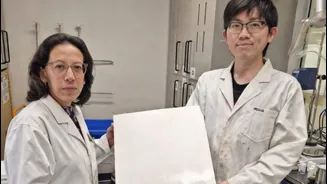
science. As undergraduate researchers were engaged with semiconductor materials, they noticed peculiar and inconsistent outcomes that seemed to be influenced by their own breath. This anomaly prompted further investigation, leading to the realization that the semiconductors were reacting to various chemical compounds present in exhaled air. This unexpected insight formed the foundation for a collaborative effort. Professor Kris Campbell, an electrical engineering expert at the university, partnered with Bamidele Omotowa, the President of Pearlhill Technologies. Their joint venture harnessed this discovery to engineer a novel solution: a device designed for the rapid and economical detection of per- and polyfluoroalkyl substances (PFAS), commonly known as 'forever chemicals,' even at very low concentrations in water samples. The project received crucial financial backing through a Small Business Technology Transfer (STTR) Research grant and an award from the National Institutes of Health (NIH), underscoring the potential societal and national value of this innovation.
PFAS: A Growing Concern
PFAS chemicals, often dubbed 'forever chemicals,' represent a pervasive environmental and health challenge due to their persistence and widespread presence in everyday products. These synthetic compounds, found in items ranging from food packaging and cookware to clothing and firefighting foam, do not easily break down in the environment or the human body. Their accumulation can lead to severe health issues, including an increased risk of various cancers, reproductive problems such as infertility, developmental delays in infants, and a weakened immune system. The implications for public health are substantial, making their detection a critical priority. Unfortunately, existing methods for identifying PFAS in water are often complex, time-consuming, and prohibitively expensive. Laboratories typically require specialized equipment and can take weeks to process a single sample, with costs mounting to around $300 per analysis, posing a significant barrier to widespread monitoring, particularly in areas like Idaho which is investing in semiconductor manufacturing, a known source of PFAS pollution.
ENVIR-OGT: The New Solution
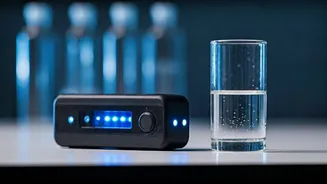
Addressing the limitations of traditional PFAS detection methods, the team at Boise State has developed a revolutionary system named ENVIR-OGT, which stands for Environmental Optically Gated Transistor. This innovative technology integrates highly specialized transistors with advanced machine learning algorithms to achieve swift and precise identification of these harmful chemicals. The ENVIR-OGT device is distinguished by its potential for field deployment, allowing for immediate analysis directly at water sources like streams or wells. Professor Campbell highlighted the device's capability to provide real-time measurements of PFAS presence, noting its affordability and speed as key advantages. The aspiration is for the ENVIR-OGT to achieve a sensitivity comparable to existing laboratory-based systems. The development process itself was a testament to collaborative effort, with contributions from students like Jacob Jackson, who applied machine learning techniques to enhance the device's detection accuracy, and Lukas Crockett, who played a vital role in refining the initial discovery into a tangible product. The successful validation of the device, demonstrated by its ability to differentiate between specific PFAS compounds, marked a significant milestone in the project's journey.
Collaborative Research Advances
The ongoing advancement of the ENVIR-OGT device is bolstered by interdisciplinary collaboration and a commitment to real-world application. Boise State chemistry faculty member Jenee Cyran and her research students are actively contributing to the project. Their work, supported by seed funding from the School of the Environment, focuses on understanding how the ENVIR-OGT performs under diverse and challenging real-world water conditions. This research is crucial for ensuring the device's reliability and effectiveness outside of controlled laboratory settings. Bamidele Omotowa has expressed gratitude for the progress made, viewing the development as a significant step forward for national environmental monitoring capabilities. The synergy between engineering, chemistry, and technological innovation, coupled with crucial grant support, underscores the comprehensive approach taken to tackle the complex issue of PFAS contamination. This collaborative spirit is essential for translating scientific discoveries into practical solutions that can safeguard public health and the environment.