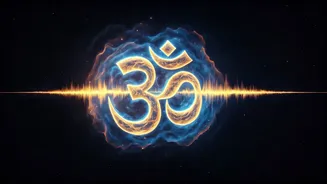







Mantra Japa: The Power of Sound
In the relentless hum of daily life, Hindu wisdom offers a profound yet simple technique: japa, the repetitive chanting of a mantra. A mantra, whether
a sacred syllable, a divine name, or a meaningful phrase, acts as a single anchor for the mind, which often flits between memories, worries, and desires. By focusing on one sound, one rhythm, one point of return, japa gently interrupts the mental chatter. This consistent repetition doesn't demand perfection but rather a simple presence, gradually creating a space of inner containment that stills the mind's incessant noise. This practice’s enduring appeal lies in its accessibility and its ability to foster tranquility, making it a cornerstone in many Hindu traditions and households, used in prayer, silence, or even during movement.
Breath Awareness: The Inner Anchor
Within Hindu philosophy and yogic traditions, the breath is recognized as a vital link between the physical body and the mental state. An agitated breath often mirrors a disturbed mind, while an even, conscious breath can lead to a calmer mental landscape. Breath-based meditation capitalizes on this connection. By consciously observing the inhale and exhale, or by subtly extending the duration of each breath through pranayama techniques, individuals can intercept escalating inner turmoil. The breath serves as a steadfast anchor in the present moment, particularly helpful during periods of anxiety, anger, or overwhelm. This practice doesn't advocate for fighting against one's thoughts; instead, it offers the mind a gentle place to rest, reinforcing the Hindu wisdom that peace begins with directed attention.
Trataka: Steadying the Gaze
Trataka represents a more focused meditation practice, involving the sustained observation of a single point, frequently a candle flame. Rooted in Hindu traditions, it is employed to enhance concentration and diminish mental diffusion. Initially, this practice might seem deceptively simple, yet its efficacy lies precisely in this straightforwardness. The eyes are potent conduits for distraction, habitually drawing the mind outward towards movement and external stimuli. Trataka counteracts this tendency by maintaining a still gaze, signaling the nervous system to decelerate. The focal object, such as a flame, transforms from a mere visual element into a powerful concentration point that gently coalesces the scattered mind. Consistent practice can significantly sharpen focus and cultivate a sense of internal equilibrium, proving especially beneficial for those who struggle with rapidly moving thoughts during silent meditation.
Witness Consciousness: Observing the Mind
The practice of witnessing is perhaps the most profound meditation technique within Hindu wisdom, advocating for an inner stance of observing thoughts, emotions, and sensations without immediate identification. Many Hindu schools of thought posit that the true self is distinct from the transient contents of the mind. Thoughts ebb and flow, feelings change, but the underlying awareness that perceives them remains constant. To engage in witness consciousness is to step back from mental storms. Instead of labeling an experience as 'I am anxious,' the practitioner learns to acknowledge 'Anxiety is present,' or rather than 'I am angry,' simply 'Anger is passing through awareness.' This subtle but significant shift creates essential space between the individual and their emotional states. It fosters clarity rather than suppression, preventing emotions from defining one's identity and opening the door to profound inner freedom by recognizing that not every thought requires belief.