

Dough Fundamentals First
The journey to perfect pooris begins with the dough, and a crucial element for that delightful crispiness and puff is the addition of 'moyan'. This involves
incorporating a small amount of either ghee or oil into the flour before kneading. This fat not only tenderizes the dough but also contributes significantly to the final texture. Once your dough is prepared, resist the temptation to fry immediately. Allow it to rest, covered, for at least half an hour. This resting period is vital; it permits the gluten to relax, making the dough more pliable and ultimately ensuring that your pooris achieve that sought-after puffy, crisp quality when fried.
Texture Enhancers
To imbue your pooris with an extra layer of crunch and ensure they puff up beautifully, consider incorporating a small measure of semolina (sooji) into your flour mixture before adding any fat. This fine grain adds a delightful texture that enhances the overall crispness. When kneading this enriched dough, aim for a consistency that is slightly firmer than what you would typically use for regular rotis. This firmer dough is key to achieving that signature poori puff. If semolina isn't readily available, or you're seeking alternative ways to achieve a crisp and puffy outcome, mashed, boiled arbi (colocasia root) can be incorporated into the dough while kneading. This humble addition works wonders in making your pooris wonderfully crisp and flavorful.
Potato and Spice Twists
When arbi is not an option, boiled potatoes offer a fantastic substitute to achieve that desired crispiness and puff in your pooris. Similar to using arbi, mash the boiled potatoes and integrate them into your dough during the kneading process. For an even more aromatic and flavorful poori, consider augmenting the dough with a pinch of kasuri methi (dried fenugreek leaves) and ajwain (carom seeds). These aromatic additions not only enhance the taste but also contribute to a pleasant texture, making each bite a delightful experience. This simple substitution and flavor infusion ensure that even without arbi, you can still create delicious and well-puffed pooris.
Rolling and Frying Precision
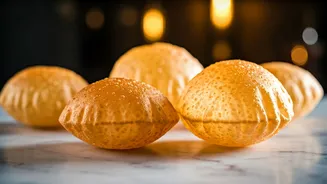
Achieving the perfect puff in your pooris hinges significantly on uniform thickness. Many home cooks inadvertently overlook this aspect, leading to uneven cooking and poor puffing. Ensure each poori is rolled to an even thickness; this consistency is paramount. Equally important is the oil temperature. Heat your oil to a high temperature before introducing the pooris. However, just before you drop each rolled poori into the hot oil, reduce the flame momentarily to medium heat. This slight adjustment prevents the exterior from browning too quickly before the inside has a chance to puff. While frying, use a slotted spoon to gently press down on the poori. This gentle pressure encourages it to expand and puff up dramatically, resembling a balloon.
Essential Frying Practices
Several small but vital practices during the rolling and handling of your pooris can significantly impact their puff. Crucially, never use dry flour when rolling out your pooris. Instead, opt for oil to aid in the rolling process; this technique helps prevent the dough from sticking and contributes to a better puff. Furthermore, avoid stacking the rolled pooris one on top of another. They can easily adhere to each other, which can hinder their ability to puff evenly when fried. As an additional tip, consider incorporating a small amount of gram flour (besan) into your poori dough during kneading. This subtle addition can further enhance the texture and crispness, adding another layer of deliciousness to your homemade pooris.