





A Famine's Noble Legacy
The story of Bara Imambara is deeply rooted in empathy and foresight. Erected in 1780 by Nawab Asaf-ud-Daula, its construction coincided with a severe
famine that gripped the region. The Nawab's vision extended beyond mere religious significance; he initiated the project as a monumental employment initiative. This endeavor provided sustenance and work for thousands of people over its nearly decade-long construction period, offering a vital income stream during a time of great hardship. Consequently, Bara Imambara stands not only as an architectural marvel but also as a powerful symbol of the ruler's profound compassion and innovative spirit in addressing a societal crisis through grand public works.
Architectural Symphony of Halls
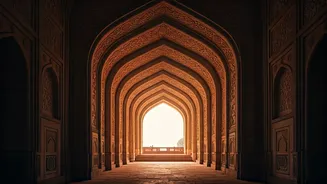
Step through the grand entrance of Bara Imambara and be captivated by a fusion of diverse architectural styles. The central hall is an engineering marvel, boasting the world's largest unsupported arched roof, a feat achieved without any timber or metal reinforcements. This immense space was designed to accommodate thousands of attendees during Muharram observances. Complementing this central chamber are three distinct adjoining halls, each offering a unique cultural narrative. The Chinese Hall showcases intricate dragon motifs, reflecting artistic influences from East Asia. The Persian Hall dazzles with exquisite mirror work and floral patterns, reminiscent of Safavid artistry. Finally, the Indian Hall features a dome shaped like a lotus blossom, celebrating indigenous architectural traditions. Together, these halls weave a rich tapestry of influences, highlighting the Nawab's inclusive vision. The central chamber, renowned as the world's largest vaulted space, also enshrines the tomb of Nawab Asaf-ud-Daulah, the visionary behind this magnificent edifice.
The Bewitching Bhul Bhulaiya
No visit to Bara Imambara is complete without delving into the enigmatic Bhul Bhulaiya, which translates to 'House of Confusion.' This captivating labyrinth, originally a recreational space for the royal family, continues to intrigue visitors with its intricate network of passages. It is widely believed to contain over 1024 pathways, though its exact complexity remains a source of fascination and playful mystery. The maze's winding corridors and concealed chambers offer a delightful challenge and fuel legends of secret escape routes for the Nawabs and hidden treasures. Navigating the Bhul Bhulaiya is an experience that blends historical intrigue with a sense of adventure, making it a quintessential element of the Bara Imambara's allure.
A Complex of Heritage
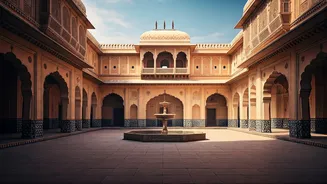
Bara Imambara is far more than just a single structure; it is a sprawling complex that encapsulates the essence of Lucknow. At its core lies the serene Asafi Masjid, an elegant mosque distinguished by its ornate stucco decorations and three distinctive domes. Adjacent to it, discover the Shahi Baoli, a remarkable stepwell that exemplifies ingenious water management practices. Initially serving as a water source for construction, it was later repurposed as the Shahi Mehmaan Khana, a lavish royal guesthouse complete with marble-clad interiors and cooling fountains, demonstrating a sophisticated blend of practicality and luxury. The harmonious integration of the Bara Imambara, Asafi Masjid, and Shahi Baoli creates a profound statement about Lucknow's heritage, reflecting its deep spiritual values, artistic achievements, and forward-thinking approach to urban design.