



Luxury Fashion's Cultural Quandary
The fashion world frequently navigates a delicate balance between drawing inspiration from diverse cultures and outright appropriation. In recent times,
prominent fashion houses have faced scrutiny for incorporating elements like Indian footwear and traditional jewelry without adequately crediting their origins. The most recent instance involves a cotton skirt from a well-known American brand, which has sparked widespread discussion about respecting cultural heritage. This trend underscores a growing consumer consciousness that demands more than just aesthetic appeal; it calls for transparency, recognition, and ethical engagement with artisanal traditions from around the globe. The discourse now extends to how brands can acknowledge and represent the rich history embedded within these crafts, moving towards a more responsible approach to cultural exchange in the industry.
The Skirt's Design and Pricing
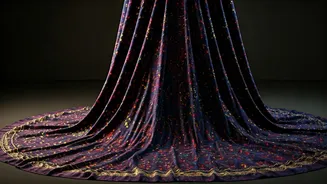
The garment at the center of this discussion is identified on the brand's official online platform as a 'Print Cotton Wrap Skirt,' a part of their Polo collection. It carries a significant price tag of Rs 44,800 and is offered in a 'Tie Dye Multi' color scheme. The product's descriptive text emphasizes its visual qualities, noting its 'beautifully draped' form and a 'vibrant design inspired by traditional Bandhini tie-dye techniques and motifs.' While the description does acknowledge the inspiration derived from Bandhini tie-dye methods, it conspicuously omits any direct mention of India as the craft's birthplace, nor does it reference the specific artisan communities who have preserved this art form for generations. This subtle omission has become the focal point of the controversy, prompting many to question whether a generalized nod to inspiration is sufficient when the visual language is so deeply and unmistakably rooted in a particular cultural heritage.
Bandhani: More Than Dyeing
Bandhani, also recognized as Bandhej, stands as one of India's most ancient textile arts, boasting a lineage that stretches back centuries. The intricate process involves meticulously tying countless minuscule knots onto fabric before immersing it in dye, a technique that yields characteristic dotted patterns. This method is exceptionally time-consuming and demands a high degree of precision, unwavering patience, and the transfer of knowledge passed down through generations. Beyond its visual appeal, Bandhani holds profound cultural and emotional significance, frequently adorning garments worn during celebratory events such as weddings and festivals. To characterize it merely as a 'tie-dye technique' risks diminishing its heritage value and overlooking the contributions of the communities dedicated to its preservation and continuation. Understanding Bandhani involves appreciating its deep historical roots and its integral role in cultural traditions, rather than reducing it to a simple dyeing process.
Authentic Bandhani Origins
In India, specific regions are renowned for producing Bandhani in its most authentic and traditional forms. In Gujarat, cities like Jamnagar and Bhuj are celebrated for their artisans' exceptional skill in creating intricate designs and employing time-honored motifs. Similarly, Jaipur and Jodhpur in Rajasthan contribute their unique flair to the craft, distinguished by their characteristic color palettes and pattern styles. Authentic Bandhani creations, ranging from elegant sarees and versatile dupattas to stylish skirts, are readily available across the country, from bustling local markets to carefully curated handloom emporiums. Purchasing these pieces directly supports the artisan communities, ensuring the continuity of this rich cultural heritage, and offers a tangible connection to the craft's origins.
Shifting Consumer Expectations
The current controversy surrounding the bandhani-inspired skirt from Ralph Lauren transcends the specific product itself, highlighting a significant evolution in consumer awareness within the fashion industry. Today's buyers are increasingly invested in the stories behind their purchases, seeking not only compelling designs but also a transparent understanding of their origins and the ethical practices involved in their creation. When global fashion entities draw inspiration from traditional crafts, the expectation has moved beyond mere aesthetic appreciation. There is a growing demand for explicit recognition of the source culture, transparency in sourcing and production, and fair representation of the communities that developed these art forms. This paradigm shift is actively nudging the fashion industry towards a more conscientious and responsible approach to engaging with and celebrating the world's diverse cultural heritage, often through meaningful collaborations and genuine storytelling.