







A Rich Artistic Legacy
The tradition of depicting fashion figures with classic proportions, often exaggerated for a slimmer silhouette, dates back centuries to the Renaissance.
This practice isn't new; it's a foundational element in how artistic representations of the human form have been stylized over time. Fashion illustrations build upon these classic ratios, stretching proportions to emphasize elongated torsos and limbs, creating a visually striking effect. This approach has evolved into an established visual language within the industry, akin to how dramatic lighting enhances editorial photography. The aim isn't to mirror reality but to present an idealized, artistic interpretation of the designer's vision, prioritizing aesthetic appeal and conceptual impact over strict anatomical correctness. This stylistic convention has deeply influenced how garments are visualized and communicated in the fashion world, contributing to a distinct artistic vernacular.
Focusing on Fabric and Form
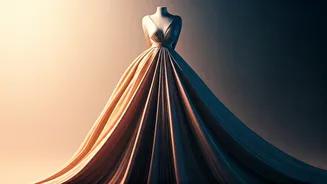
Fashion illustrators intentionally stretch their base figures, known as croquis, to be significantly taller than average humans, often nine to ten heads tall compared to a typical 7.5. This exaggeration serves a crucial purpose: it amplifies the visual impact of the garment. By elongating the figure, designers can more dramatically highlight the fabric's drape, the intricacies of embroidery, the flow of movement, and the overall silhouette of the design. This extended canvas provides ample space to meticulously showcase fine details like pleating, layering techniques, elaborate beadwork, and surface ornamentation. The narrow frame further accentuates the elegance and fluidity of gowns, tailored pieces, and couture creations, allowing designers to better visualize how a garment will move and present itself on a runway or in a professional editorial context, thereby enhancing its aesthetic appeal.
Elegance and Artistic Expression
Historically, particularly within Parisian haute couture, the long and slender silhouette became an established aesthetic standard long before contemporary discussions around body positivity emerged. Renowned illustrators like Rene Gruau were instrumental in popularizing these stylized proportions, using them as an artistic shorthand to convey glamour and fantasy. This approach transformed fashion illustration into a medium that prioritized visual storytelling and aspiration, rather than a literal representation of the human body. It's a technique that imbues garments with a sense of fluidity and grace, making them appear more ethereal and captivating. This artistic convention, while deeply ingrained, is fundamentally a creative and technical tool employed for aesthetic impact, not a reflection of medically or socially defined beauty standards.
Evolving Standards in Fashion
While the tradition of using elongated, slim figures in fashion sketches has been a long-standing industry norm, there's a noticeable shift occurring. Many contemporary designers and educational institutions are actively encouraging a move towards more inclusive representation. Fashion schools are increasingly guiding illustrators to sketch for a broader range of target consumers, diverging from the singular, idealized body type. This evolution signifies a growing awareness that creativity and the power of design should not be confined to a single proportion. The ability of a skilled designer to conceptualize beauty, structure, and elegance across all body types is becoming a mark of strength, proving that impactful fashion can indeed adorn and empower every individual, regardless of their shape or size.