






V3 Debut Imminent
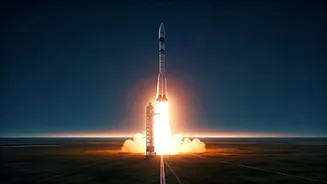
The aerospace giant SpaceX is poised to conduct the inaugural flight of its upgraded Starship rocket, designated 'Version 3,' within approximately four
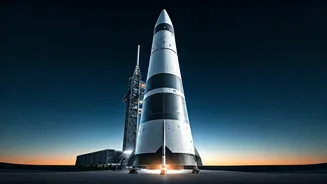
weeks, as indicated by Elon Musk. This highly anticipated launch marks the 12th mission for the Starship program and represents a significant leap forward in the rocket's development. The V3 model introduces substantial enhancements to both the Super Heavy booster and the Ship upper stage. These upgrades include increased dimensions and more potent, efficient thrust generated by SpaceX's refined Raptor 3 rocket engines. These advancements are set to further solidify Starship's status as the largest and most powerful launch vehicle ever created, pushing the boundaries of spaceflight capabilities even further than its predecessors.
Evolution of Starship
The journey to Starship V3 has seen continuous refinement, marked by both successes and learning opportunities. The preceding Starship V2 concluded its operational phase following the Flight 11 launch last October, signaling a recovery after an initial period in early 2025 that experienced challenges with the upper stage exploding during its first three missions in January, March, and May. Despite these early hurdles, the final two Starship flights of the past year were successfully executed. However, development for V3 encountered a setback when the first Super Heavy booster for this new version experienced an incident on a test stand in November. This event necessitated the construction of an additional booster, extending the debut timeline by several months. Concurrently, SpaceX has made substantial progress on its second launch pad at its South Texas facility, aiming to commence testing operations for the Flight 12 booster imminently. Furthermore, the Starship V3 upper stage, identified as Ship 39, has successfully completed its pre-launch qualification tests. These tests involved evaluating the vehicle's advanced propellant system and its structural integrity, including rigorous squeeze tests designed to simulate the immense forces encountered during the planned mid-air catches by the 'Mechazilla' launch tower.
Future Recovery Innovations
Starship is engineered from the ground up for complete reusability, a pivotal feature for its ambitious mission profile. The Super Heavy booster has demonstrated its landing capability by successfully returning to its Starbase pad on three occasions, where the distinctive 'chopstick' arms of the 'Mechazilla' launch tower are designed to catch it mid-air. The recent completion of the site's second launch pad and associated tower not only streamlines operations but also opens the door for implementing mid-air catch and recovery procedures for the Ship upper stage itself. This would mark the first instance of such a recovery for the Starship's upper component. This capacity for seamless landing and subsequent relaunch is absolutely critical for SpaceX's long-term objectives, particularly its contract with NASA to develop a variant of the Starship upper stage for the Artemis program's lunar lander. Originally slated for a crewed lunar landing on Artemis 3 in 2028, the timeline for this mission has been accelerated due to recent adjustments in NASA's Artemis mission roadmap, now targeting a 2027 launch.
Artemis Program Integration
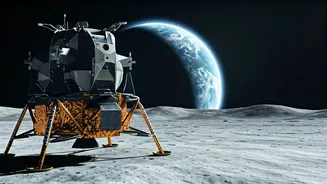
The accelerated timeline for NASA's Artemis 3 mission, now slated for 2027, introduces new dynamics for lunar lander deployment. The mission is planned to reach low Earth orbit, where the Orion crew capsule will rendezvous and dock with either one or both of the designated lunar landers. Beyond SpaceX's Starship, NASA has also selected Blue Origin's 'Blue Moon' lander for subsequent crewed lunar surface missions within the Artemis program. In conjunction with the recent restructuring of the Artemis mission schedule, NASA has expressed flexibility regarding which lander will be utilized for Artemis 3, contingent on their operational readiness at the time of launch. This means that if only one of the competing lander systems is space-worthy when the mission is set to depart, its counterpart may forfeit the opportunity to conduct the program's inaugural crewed lunar landing. The responsibility for this historic first landing is now anticipated to fall to Artemis 4, underscoring the importance of each vehicle's developmental progress.