




Voter List Concerns Emerge
With West Bengal on the brink of its two-phase assembly elections, a significant debate has ignited surrounding the transparency and accuracy of voter
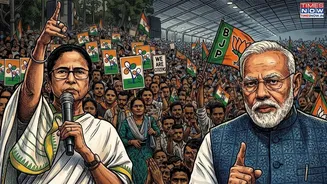
rolls. Following the recent release of the final voter lists by the Election Commission, data revealed under Supreme Court supervision indicates a concerning trend: on approximately 15% of the 293 assembly seats, the number of voters whose names were removed from the electoral register surpasses the margin of victory achieved in the 2021 elections. This revelation has intensified discussions among political stakeholders, raising questions about the potential ramifications for electoral fairness and the true representation of the electorate. The analysis, which excludes the Dhanhta seat due to its unique ballot voting process alongside EVMs, focuses on EVM-based voter data to maintain consistency in the current electoral context.
Impact on Close Contests
Trinamool Congress leader and social activist Sofia Khan has voiced strong opinions on the implications of these voter list discrepancies. She pointed out that the removal of a substantial number of names from voter rolls could significantly sway election results, especially in constituencies that have historically seen narrow margins of victory. Khan specifically highlighted that there are 44 assembly seats where the number of deleted voter names exceeds the victory margin from the previous election. Within this group, 24 seats were secured by the Trinamool Congress and 20 by the BJP in 2021. This situation underscores the sensitivity of voter list accuracy, as even minor shifts can have a profound effect on the final outcome in tightly fought races.
District-Wise Analysis
Khan further elaborated on the geographical distribution of these affected constituencies, noting that many of them are concentrated in the Purba Bardhaman, Paschim Bardhaman, and Nadia districts, with five seats each from these regions appearing on the list. North 24 Parganas and Paschim Medinipur districts are also significantly impacted, accounting for four and three seats respectively. Additionally, Cooch Behar, South Dinajpur, and Murshidabad districts each have three seats where voter deletions have exceeded past victory margins. This regional focus suggests that specific areas might be disproportionately affected, prompting a closer examination of electoral dynamics within these districts.
Case Studies of Concern
Providing concrete examples to illustrate her point, Sofia Khan cited the case of Samsirganj in Murshidabad, where over 74,000 voter names were reportedly deleted, a stark contrast to the Trinamool Congress's victory margin of approximately 26,000 votes in 2021. Another instance highlighted was Balrampur in Purulia, a constituency won by the BJP by a slender margin of just 273 votes in the last election, but which has now seen over 1,000 voter names removed. The Matua-dominated seats of Gaighata and Bagda in North 24 Parganas also present similar concerns. Gaighata, won by 9,603 votes previously, has experienced the deletion of around 19,000 voter names this time, while Bagda has also seen more names removed than its past victory margin.
Ensuring Democratic Fairness
Khan emphasized that political parties are keenly observing constituencies where the margin between victory and defeat has been historically slim. The Trinamool Congress, aiming for an ambitious internal target of 250 seats, has been actively engaged in formulating its election strategy over the past few months. However, she reiterated her core message: the fundamental pillars of a healthy democratic process lie in the transparency of the voter list and the guaranteed inclusion of every eligible citizen. Only by ensuring that all eligible voters can exercise their right to vote can the system truly reflect the will of the people and uphold the principles of representative governance.