






A Quantum Leap
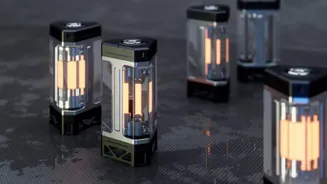
A pioneering team of Australian researchers has successfully developed a quantum battery, marking a significant milestone in the quest for advanced energy
storage. While this initial prototype is a proof of concept with a very limited capacity, measuring only a few billion electron volts – deemed insufficient for practical use by lead researcher Dr. James Quach of CSIRO – it represents a crucial step forward. Published in a leading journal, this work showcases the potential for a future where batteries operate on entirely new principles. The experimental battery demonstrated astonishing charging speeds, completing its charge cycle in mere femtoseconds, which are quadrillionths of a second, and managed to retain its stored energy for nanoseconds. This dramatic difference in charge and discharge times, a gap of six orders of magnitude, is likened by Quach to a battery that charges in a minute but can hold its power for roughly two years, hinting at the transformative power of quantum mechanics in energy technology.
Revolutionary Charging Dynamics
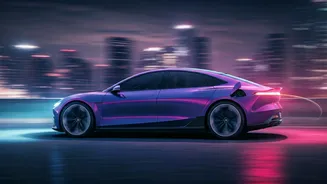
The future envisioned with a fully functional quantum battery involves incredibly rapid charging capabilities, potentially even enabling remote charging through the use of lasers. Dr. Quach highlights its immense potential for applications such as drone technology, where charging could occur seamlessly while the device is airborne. Furthermore, he foresees a revolution in the electric vehicle sector, suggesting that as the technology matures, drivers might no longer need to make stops at charging stations. Instead, vehicles could be charged dynamically while in motion. This paradigm shift stems from a fundamental difference in how quantum batteries operate compared to their conventional chemical counterparts. Instead of the conventional relationship where larger batteries require longer charging times, quantum batteries exhibit a peculiar characteristic known as collective effects. This phenomenon allows multiple quantum battery cells to charge more efficiently when grouped together. Unlike traditional batteries that rely on chemical reactions, quantum batteries harness the principles of quantum mechanics, where the interconnectedness of subatomic particles through entanglement links all the cells, enabling this accelerated charging behavior.
Expert Endorsement and Early Impact
Professor Andrew White, a distinguished expert in quantum technology at the University of Queensland, who was not directly involved in this research, has expressed his strong approval of the findings. He describes the work as a "really nice piece of work" that moves beyond theoretical concepts to demonstrate a tangible "working prototype." While Professor White cautions that widespread adoption in electric cars is not imminent, he believes the initial impact of quantum batteries will likely be seen in the field of quantum computing. He elaborates that these machines would benefit from the coherent power delivery offered by quantum batteries, operating with the utmost energy efficiency and minimal energy loss. This endorsement from a leading figure in the field underscores the significance of the Australian team's achievement, validating the experimental advancements in quantum energy storage and pointing towards specific, high-impact early applications.
Future Applications & Development
The implications of such a revolutionary battery technology extend across a wide spectrum of applications, from powering electric vehicles and quantum computers to enhancing drone capabilities. CSIRO, the Australian agency spearheading this research, is actively seeking "interest from potential development partners" to propel this technology to the next stage of its evolution. Currently, the primary challenge lies in extending the energy storage duration beyond the existing nanoseconds. However, the research team is resolute in their commitment to "overcome that hurdle" with all possible speed. While there is still a significant journey ahead before this experimental technology can be integrated into everyday devices and infrastructure, the foundational breakthrough has been made, paving the way for a future powered by ultra-fast, highly efficient quantum batteries that could redefine our relationship with energy.