






Chilli's American Roots
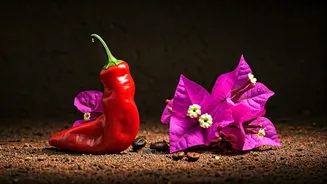
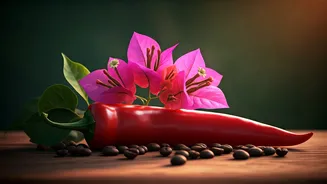
It's almost impossible to envision Indian kitchens without the ubiquitous chilli pepper, a staple that provides heat and flavour to countless dishes. However,
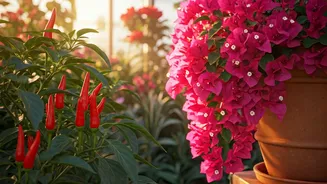
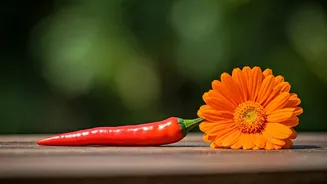
this fiery fruit's journey to India began not on Indian soil, but in the Americas. Portuguese traders introduced chillies from Central and South America during the 15th and 16th centuries. Before their arrival, Indian cooks relied on black pepper and long pepper to spice their food. The chilli pepper, however, proved remarkably adaptable to India's warm climate, rapidly integrating into regional culinary traditions and becoming an indispensable ingredient across the subcontinent. These plants, now thriving globally in warm regions, represent a significant culinary exchange that reshaped Indian food forever.
Bougainvillea's South American Bloom
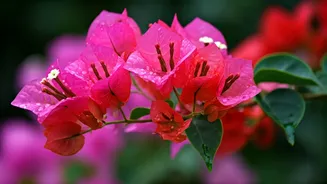
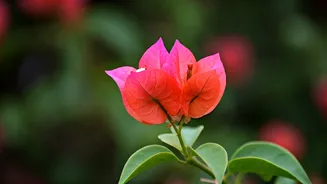
The vibrant cascades of bougainvillea, adorning walls and streets with their dazzling pink, purple, orange, and white bracts, are a common sight in India. Yet, this visually stunning plant originates from South America, with notable origins in countries like Brazil, Peru, and Argentina. Its popularity in tropical and subtropical areas worldwide stems from its resilience, particularly its ability to withstand drought, coupled with its spectacular ornamental value. Varieties like 'Golden Glow,' 'Louis Wathen,' and 'Mrs. Butt' showcase a spectrum of colours derived from hybrids, making bougainvillea a hardy and beloved choice for warm climates seeking a burst of colour.
Eucalyptus: An Australian Import
Eucalyptus trees, widely cultivated across India for their rapid growth and utility in timber and paper production, are a familiar sight in the landscape. Despite their prevalence, these trees are not native to India; their origins lie in Australia. Belonging to the myrtle family, the genus Eucalyptus encompasses over 660 species of shrubs and trees indigenous to Australia and nearby islands. Introduced during the colonial era, their fast-growing nature made them a favoured choice for afforestation. However, their widespread planting has also sparked environmental discussions regarding their substantial water consumption and potential impact on local biodiversity.
Gulmohar's Madagascar Home
The striking appearance of the gulmohar tree, celebrated for its brilliant orange-red blossoms that create a fiery spectacle during the summer months, often leads to the misconception that it is an indigenous Indian species. In truth, the gulmohar's native habitat is Madagascar. While now widely distributed across subtropical and tropical regions globally, it has been extensively planted in India, particularly as an ornamental tree along avenues and in gardens, thriving in both humid and dry tropical environments. Its dramatic floral display and expansive canopy have cemented its status as a favoured decorative tree in Indian cities and academic campuses.
Papaya's Mesoamerican Beginning
Papaya, a fruit now a common sight in Indian cultivation and consumption, hails from Central America and southern Mexico. Introduced to India centuries ago through maritime trade routes, the papaya plant quickly acclimatized to the tropical climate. Its nutritional benefits, particularly its digestive properties, made it a valuable addition to the Indian diet. India currently leads global papaya production, contributing approximately 3 million tonnes annually to the world's total estimated output of 6 million tonnes. Other major papaya-producing nations include Brazil, Mexico, and Indonesia, highlighting the fruit's widespread success beyond its original homeland.