






Samosa: More Than a Snack
The humble samosa, often perceived as mere Indian fast food or a simple pastry, actually holds a much deeper significance in Indian culture. Beyond its
familiar triangular shape and savory filling, it acts as a versatile culinary companion, gracing tea-time gatherings, office breaks, comforting monsoon moments, and festive celebrations. The variations in its fillings are astounding, ranging from spiced potatoes and peas to lentils and minced meats, with regional twists that defy the conventional notion of this beloved snack. Its importance transcends taste; it's often shared with friends, accompanied by vibrant chutneys, and enjoyed as a comforting bite on the way home. While seemingly modest, the samosa is a cornerstone of everyday Indian food experiences.
Curry: A Culinary Category
When asked to name an Indian dish, 'curry' frequently tops the list for foreigners. However, the reality is far more nuanced, as 'curry' is not a monolithic entity like soup or pasta. In India, the term is used broadly, while in the West, it has become an umbrella label for almost any dish featuring a sauce. This simplification leads to a significant misunderstanding of the vast diversity within Indian cooking. A Bengali fish curry, for instance, bears little resemblance to a Delhi rajma masala or a Gujarati dal. These preparations vary dramatically in consistency, from watery to thick, and in flavor profiles, ranging from tangy and earthy to delicately light. 'Curry' is best understood as a broad category of cooking techniques rather than a single, fixed recipe.
Biryani: Layered Artistry
Biryani frequently faces misunderstanding, often depicted as a simple blend of rice, meat, and spices, akin to an elaborate version of fried rice. In truth, biryani is a sophisticated culinary endeavor, characterized by its layered structure and aromatic depth, with distinct regional identities. The rice is meticulously prepared, not merely mixed with leftovers. Each regional variation, such as Hyderabadi, Lucknowi, or Kolkata biryani, tells a unique story through its flavor profile, some being robust and intense, while others are delicate and perfumed. The essence of biryani lies not just in its components, but in achieving a perfect balance of flavors, intricate layering, and masterful cooking techniques.
Dosa: Fermented Staple
While often likened to a crepe due to its thinness and crispness, the dosa is far more than a Western breakfast item. It represents a cornerstone of South Indian culinary heritage, built upon the foundation of fermented batter, rice, and lentils, traditionally served with flavorful chutneys and sambar. The true appreciation of a dosa lies in understanding its intricate preparation process as much as its final texture. Mistaking it for a mere novelty snack overlooks its status as an everyday staple in many Indian households. Dosas can vary greatly in form, from plain and thin to thick and stuffed, showcasing a diverse personality rather than a singular identity.
Chai: Ritual Over Drink
Referring to chai simply as 'tea' misses its profound cultural significance. Masala chai, in particular, is a deeply ingrained ritual, often brewed with milk, sugar, tea leaves, and a blend of spices. The specific preparation and meaning can shift significantly from one region to another and even between families. It’s less about a rigid recipe and more about a daily vernacular. The common misconception arises from viewing chai as a trendy café beverage, when in India, it is an ordinary, intimate, and profoundly social experience. It's the comforting presence during breaks, heated discussions, rainy afternoons, and late-night conversations.
Chicken Tikka Masala Origins
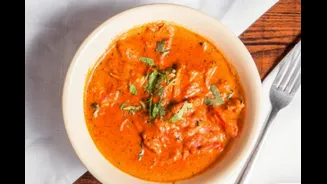
A frequent point of confusion is the belief that chicken tikka masala is an authentic, traditional Indian dish identical to chicken tikka. This is not the case. Chicken tikka refers to marinated and grilled chicken pieces. Chicken tikka masala, conversely, is a richer, saucier creation that evolved in a distinct context, particularly within diaspora communities. This adaptation does not diminish its value; rather, it highlights the dynamic and evolving nature of Indian cuisine, which travels, adapts, and embraces new forms over time.
Paneer: Versatile Cheese
Foreigners are often surprised by paneer's unique texture, expecting it to melt like Western cheeses such as mozzarella or cheddar. Its resistance to melting in dishes like paneer tikka or palak paneer is precisely its strength. Paneer is a fresh, mild cheese intentionally crafted to retain its shape when heated, making it ideal for Indian cooking. It is designed to absorb spices, sit beautifully in gravies, and provide a satisfying bite, often serving as a protein source in vegetarian cuisine. Understanding paneer solely as 'cheese' overlooks its crucial role in adding richness and texture to a wide array of Indian vegetarian dishes.
Butter Chicken's Place
For many outside India, butter chicken represents the quintessential Indian dish—rich, creamy, and slightly sweet. While its global popularity is undeniable, this fame can lead to a stereotype that Indian food is exclusively heavy and gravy-laden. Butter chicken, a delicious dish originating from a specific North Indian restaurant tradition, is just one facet of India's vast culinary landscape. It does not encompass everyday home cooking across the country. The global perception often misses the immense diversity of Indian cuisine, where a meal in Kerala can be a world apart from one in Punjab or Bengal.