





Sensors: The New Eyes
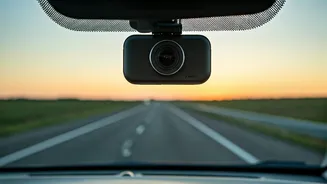
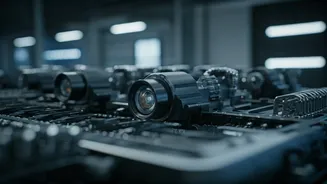
Contemporary vehicles are increasingly equipped with a multitude of sensors, ranging from cameras to radar systems. These components are fundamental to the
operation of advanced driver-assistance systems (ADAS) and are becoming even more prevalent as vehicles transition towards greater autonomy. The precision of these sensors is paramount, as even minute deviations in their alignment can significantly compromise the vehicle's ability to perceive its surroundings accurately. When a car experiences any form of impact, even minor ones like a fender bender, the delicate positioning of these sensors can be disrupted. Standard repair processes may physically reposition sensors, but achieving the exact factory calibration is often not possible, leading to potential functional deficits. This highlights a critical need for specialized services that can restore these sensors to their optimal performance, much like an optometrist corrects human vision.
Digital Prescription Service
A burgeoning startup is stepping in to address this sophisticated automotive need by offering a unique calibration service, drawing a compelling parallel to human optometry. Just as an optometrist meticulously assesses vision and prescribes corrective lenses, this service provides a 'digital prescription' for a vehicle's sensors. After a collision, when panels may be slightly bent or parts replaced, the precise alignment of critical sensors like cameras and radars can be thrown off. Even a fractional degree of misalignment can lead to erroneous data inputs, potentially causing issues such as phantom braking or erratic steering. This company's innovative robotics platform and specialized software are designed to precisely recalibrate these sensors, ensuring the car's perception aligns perfectly with its intended actions, thereby maintaining the integrity and safety of its advanced driving capabilities.
The Future Auto Shop
The operational facilities for this advanced sensor calibration are designed to be a stark contrast to traditional, often noisy, auto body shops. These hubs are characterized by a clean, quiet environment, featuring specialized equipment such as rotating platforms and robotic arms mounted on tracks. Typically staffed by a minimal number of highly trained technicians, these centers employ sophisticated camera packages to capture detailed imagery of the vehicle and its sensors. A robotic arm then uses precise laser measurements to assess and adjust the radar sensors. This meticulous process, which can be completed in as little as 10 minutes per vehicle, ensures that the car's internal systems and its external sensors are perfectly synchronized. This efficiency allows a single facility to service a considerable number of vehicles daily, establishing a new paradigm for automotive repair infrastructure focused on technology and precision.
Scaling for Autonomy
Beyond individual vehicle repairs, the long-term vision for this calibration technology extends to servicing entire fleets of autonomous vehicles (AVs). As AVs become more prevalent, they will require continuous maintenance and recalibration due to their heavy reliance on sensor data. The company aims to expand its network of specialized hubs significantly, creating an essential infrastructure layer for the future of automotive autonomy. This involves a shift from the traditional model of service stations to a more technologically advanced ecosystem built around robotics and software. The goal is to provide a consistent and reliable service that supports the complex needs of self-driving technology, ensuring safety and operational efficiency on a much larger scale than currently offered by conventional automotive service providers.