



Final Countdown Checks
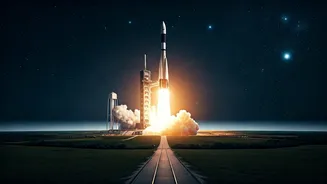
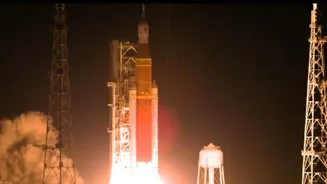
As the Artemis II mission approaches its launch window, NASA teams are meticulously completing the final stages of preparation, ensuring every system is primed
for the historic journey. The closeout crew has finalized the critical task of sealing the Orion spacecraft's hatch, a definitive step signifying the astronauts' readiness for flight and the module's pressurized integrity. Concurrently, a crucial final weather briefing confirmed approximately 80% favorable launch conditions, with teams diligently monitoring potential concerns such as cloud cover, precipitation, and ground-level winds across the launch site, abort zones, and recovery areas to uphold the highest safety standards for the four-member crew. This comprehensive oversight underscores NASA's commitment to a secure and successful mission as the countdown intensifies.
The Pioneering Crew
The Artemis II mission will make history not only as the first crewed lunar journey in over five decades but also by carrying a diverse and trailblazing crew. Commander Reid Wiseman, a seasoned NASA astronaut with extensive spaceflight and test pilot experience, leads the mission. He is joined by Pilot Victor Glover, a US Navy captain and test pilot who previously served on the International Space Station, becoming the first person of color to venture beyond low Earth orbit. Mission Specialist Christina Koch, an electrical engineer with a record for the longest single spaceflight by a woman, makes history as the first woman to travel beyond Earth's orbit. Rounding out the crew is Mission Specialist Jeremy Hansen, a colonel in the Royal Canadian Air Force, who will be the first Canadian and non-American to embark on a lunar mission. Together, they represent a significant step forward in global space exploration and inclusivity.
Mission Objectives & Lunar Flyby
Unlike previous lunar missions, Artemis II's primary objective is not to land on the Moon but to conduct a crucial flyby and test the vital systems of the Orion spacecraft and Space Launch System (SLS) rocket in the deep space environment. This approximately 10-day mission will send the crew on a trajectory around the Moon, reaching distances unprecedented for human spaceflight in over 50 years. During this journey, astronauts will rigorously evaluate critical onboard systems, including life support, communication, and navigation technologies, gathering essential data to ensure the safety and efficacy of these technologies for future lunar landings and beyond. This mission serves as a vital stepping stone, building upon the success of the uncrewed Artemis I and paving the way for sustained human presence on the Moon and eventual voyages to Mars.
Launch Preparations Unveiled
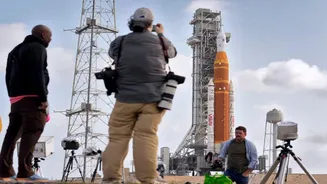
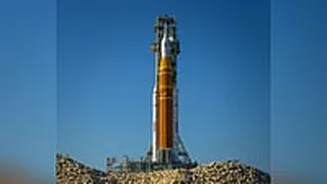
The path to the Artemis II launch has been marked by extensive preparation, culminating in the Space Launch System (SLS) rocket and Orion spacecraft's rollout to Launch Pad 39B at Kennedy Space Center. NASA has successfully navigated critical readiness reviews, signifying the green light for final pre-launch activities. Teams have been diligently working through intricate procedures, including retracting launch platforms, securing various systems, and preparing the colossal rocket for the complex fueling process and countdown sequence. The interim cryogenic propulsion stage is undergoing rapid loading of liquid oxygen (LOX) following its chilldown, an essential step for its role in propelling Orion into high Earth orbit and initiating its translunar injection burn. These meticulous steps ensure the vehicle is fully prepared for its demanding mission.
Weather: A Critical Factor
Climatic conditions play an indispensable role in the Artemis II launch schedule, with NASA and the US Space Force's Space Launch Delta 45 continuously scrutinizing the forecast. The current projections indicate a robust 80% probability of favorable weather, a significant hurdle cleared for liftoff. However, primary concerns revolve around potential cloud cover and wind speeds at ground level, alongside the ever-present risk of lightning. These factors are subject to real-time evaluation, meaning the final go/no-go decision hinges on the precise weather conditions at the moment of launch. NASA's commitment to safety necessitates adherence to stringent weather criteria, ensuring the mission proceeds only when all environmental factors are within acceptable parameters.