






Cosmic Comforts Emerge
The drive to send humans beyond Earth’s atmosphere necessitated solutions to extreme environmental challenges, many of which have profoundly reshaped our
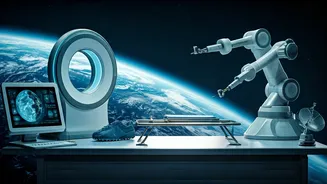
terrestrial lives. The quest for breathable air in the vacuum of space led to the development of advanced water purification systems. Early NASA endeavors in the 1960s devised an electrolytic silver iodizer to ensure astronauts had access to safe drinking water. This groundbreaking technology, originally designed for the rigors of space, is now a common feature in recreational swimming pools, safeguarding against harmful bacteria and ensuring clean water for millions. Similarly, the need to collect lunar samples without the burden of heavy machinery spurred a collaboration with a well-known appliance manufacturer. This partnership resulted in a lightweight, portable vacuum device, which, after its commercial release, became a household staple, demonstrating how space-age problem-solving directly translates into practical consumer goods that simplify domestic tasks and enhance our living environments. The insulating materials that protected astronauts from extreme temperatures are now a cornerstone of energy-efficient home construction, showcasing a direct lineage from the final frontier to our own living spaces.
Digital Leap Skyward
The intricate demands of space missions have been a powerful catalyst for advancements in computing and communication, fundamentally altering how we interact with technology. The need for a single, portable computing unit for critical on-orbit operations led to the creation of one of the earliest portable laptops in 1982. This pioneering device, designed for the harsh realities of space travel, featured innovative software that would later find widespread adoption in the commercial market, paving the way for the ubiquitous laptops we use today. Furthermore, the desire to make human-computer interactions more intuitive spurred a significant breakthrough in the 1960s when a NASA researcher’s efforts to enhance interactivity inadvertently led to the invention of the computer mouse. Communication during space missions also benefited immensely, as NASA developed wireless headsets to liberate astronauts from cumbersome wires, a technology that has since become standard in personal and professional communication. The challenge of capturing high-resolution images from vast distances and within the confines of spacecraft led to the miniaturization of camera technology. By the 1990s, a team at NASA's Jet Propulsion Laboratory had engineered cameras small enough for spacecraft, possessing scientific-grade quality. Astonishingly, this very technology now forms the basis for approximately one-third of the cameras found in modern smartphones, illustrating how the pursuit of celestial photography has democratized high-quality imaging for everyone.
From Astronauts to Athletes
The unique requirements of space exploration have not only advanced our technological capabilities but have also surprisingly influenced our athletic pursuits and personal well-being. The development of scratch-resistant lenses, crucial for protecting astronauts' eyes in the harsh conditions of space, originated from research into protective coatings for aerospace applications. This innovation, pioneered by NASA's Lewis Research Center, has since become a standard feature in eyewear, safeguarding our vision in everyday life. Even the shoes on our feet can trace their lineage back to the space program. The concept behind advanced athletic footwear, particularly shock-absorbing designs, was first proposed by a former NASA engineer who drew inspiration from the construction technologies used for astronaut suits. This cross-pollination of ideas has led to enhanced comfort and performance in sports. Moreover, NASA’s work with shock-absorbing materials and robotic advancements in extravehicular activities is now being adapted to create more sophisticated and functionally dynamic artificial limbs, improving mobility and quality of life for individuals with limb differences. The pursuit of better imaging for scientific observation in space also indirectly contributed to the development of CAT scanners and advanced radiography, revolutionizing medical diagnostics and enabling earlier and more precise detection of diseases, thereby directly impacting human health right here on Earth.
Safety and Utility Amplified
The extreme environments and critical mission objectives of space travel have driven the creation of technologies that enhance safety and utility in numerous terrestrial applications, often in ways that are not immediately apparent. The need for reliable and robust tools in hazardous extraterrestrial environments has led to innovations with profound real-world impact. For instance, NASA's surplus rocket fuel has been ingeniously repurposed to create a potent flare capable of safely neutralizing landmines. This technology functions by burning a precise hole through the mine, effectively rendering it inert without triggering detonation, thereby playing a crucial role in clearing hazardous areas and saving lives. Furthermore, the development of the 'Jaws of Life,' an essential rescue tool for extricating individuals from severely damaged vehicles, employs a principle derived from space shuttle technology. Specifically, it utilizes a miniature version of the explosive charge used to separate components of spacecraft during missions, enabling swift and efficient rescue operations in critical situations. This direct transfer of high-impact engineering solutions from the domain of spaceflight to emergency services underscores the far-reaching benefits of our endeavors beyond Earth, demonstrating how the pursuit of cosmic exploration continually provides tangible improvements to our safety and security on the ground.