







First Double-Decker Ready
The initial phase of Delhi's ambitious double-decker transit system is nearing completion. Specifically, the stretch between Bhajanpura and Yamuna Vihar,
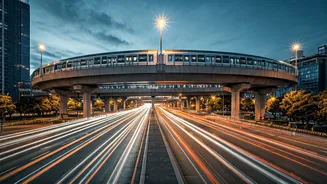
a vital part of the Maujpur-Majlis Park corridor, has seen the upper deck, designated for metro trains, fully constructed. Extensive trial runs and thorough safety assessments by the Commissioner of Metro Rail Safety (CMRS) have already been successfully concluded, indicating operational readiness for the elevated rail segment. Below this, the road infrastructure is concurrently advancing, with construction of the necessary ramps now underway following the acquisition of permits for tree relocation. This lower level is anticipated to accommodate vehicular traffic, including cars and bikes, and is slated for opening by mid-2024. The successful integration of these two transport layers on a single structure marks a significant milestone. Once this segment is fully operational, it will not only ease traffic congestion in the densely populated North-East Delhi but also complete the Pink Line, establishing it as Delhi Metro's first fully circular route, enhancing connectivity and simplifying travel for countless commuters across the city.
More Sky-High Corridors
Building on the success of the initial project, Delhi is actively developing additional double-decker corridors to further enhance its transit network. Another significant undertaking is the 2.2 km stretch between Azadpur and Ashok Vihar, part of the Janakpuri West-RK Ashram Marg corridor. Construction on this section is progressing, with foundations for ramps being laid and substantial flyover girders already being installed. This route is also expected to be operational within the current year. Furthermore, the longest of the planned double-decker routes, spanning approximately 2.4 km between Sangam Vihar and Ambedkar Nagar, is under construction. This segment is a key component of the new Golden Line, connecting Tughlakabad and Aerocity. Construction of the metro pillars and spans for this route is actively underway. The Delhi government is providing substantial support for the development of all these pioneering projects, demonstrating a unified commitment to improving urban mobility. These initiatives are integral to the broader Delhi Metro Phase IV expansion, which encompasses 112.4 km of new lines, 94 new stations, and 6 new corridors, with a focus on integrating these innovative double-decker designs.
Neighborhood Transformations
The introduction of these advanced double-decker transit corridors is poised to catalyze significant positive changes in the surrounding neighborhoods. Areas like Yamuna Vihar and Bhajanpura, which were previously known for their traffic bottlenecks and challenging road conditions, are set to experience a marked improvement in accessibility and quality of life. The enhanced metro connectivity is anticipated to increase interest in residential properties in Yamuna Vihar, making it a more attractive option for families and professionals seeking convenient commutes. Similarly, Azadpur and Ashok Vihar are expected to benefit from improved traffic flow alongside superior metro access, which will contribute to a smoother daily routine for residents. This enhanced livability could stimulate both immediate housing demand and long-term property investment in Ashok Vihar. The underlying principle is that a reduction in travel time and stress directly translates into a more comfortable and desirable living environment. Ultimately, these infrastructure developments are designed to make urban living more efficient and pleasant by maximizing the use of limited city space, allowing trains to travel overhead while road traffic flows beneath.