



The Sonic Thump Revolution
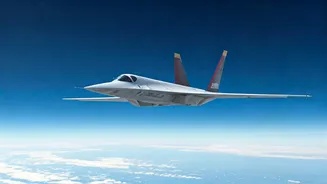
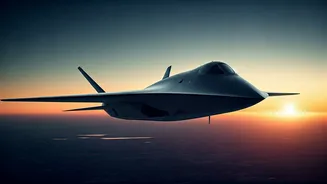
The era of jarring sonic booms may soon be a memory, thanks to NASA's innovative X-59 aircraft. This remarkable machine is engineered not to create the
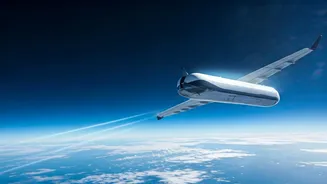
deafening sound associated with supersonic speeds, but rather a much gentler "sonic thump." This significant advancement is the key to potentially reintroducing supersonic commercial air travel over land, a feat previously hindered by noise pollution concerns. The X-59 aims to prove that exceeding the speed of sound doesn't have to mean disturbing communities below. Its entire existence is focused on demonstrating that faster flight can indeed be quieter, meeting an acceptable noise threshold that could redefine aerial transportation and bring back the allure of swift, long-distance journeys without the environmental drawback.
Aerodynamic Design for Quiet Flight
The X-59's ability to achieve speeds exceeding 1,000 miles per hour, a staggering 1.3 times the speed of sound, is directly attributed to its meticulously crafted airframe. Unlike traditional aircraft that generate intense shockwaves, the X-59's design, spearheaded by its exceptionally long, needle-like nose, actively manipulates airflow. This elongated profile and the strategic placement of its engines, canards, and tail are engineered to spread out the pressure waves, preventing them from coalescing into the characteristic cone that produces a sonic boom. Instead, these carefully managed waves weaken before reaching the ground, resulting in the much softer sonic thump. The aircraft's 99.7-foot length is a testament to this design philosophy, with the nose alone playing a crucial role in mitigating the noise, fundamentally altering how supersonic flight impacts the environment below.
Innovative Cockpit and Vision System
A truly unique aspect of the X-59 is its unconventional cockpit. To maintain the aerodynamic integrity of its sleek, unbroken nose, there is no forward-facing cockpit window. Such an opening would inevitably create a disruptive shockwave, undermining the aircraft's core purpose. NASA has ingeniously overcome this challenge by implementing an External Vision System (XVS). This advanced system utilizes an array of high-definition 4K cameras mounted on the exterior, feeding real-time imagery directly into the cockpit displays. This setup allows the pilot to 'see' out and navigate effectively without compromising the aircraft's smooth, noise-reducing contour, showcasing a novel solution to a complex engineering problem.
Lessons from Concorde's Legacy
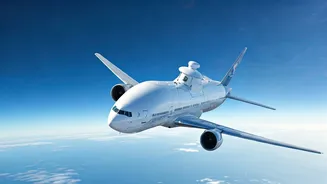
The dream of supersonic passenger travel isn't entirely new; the Concorde, operated by British Airways and Air France between 1976 and 2003, offered a glimpse into this possibility. For years, it dramatically reduced transatlantic flight times to under four hours, even providing passengers with views of Earth's curvature from its cruising altitude of 60,000 feet. However, the Concorde's operational costs were prohibitively high for both airlines and passengers. Compounded by a tragic crash in 2000, the program was ultimately retired. NASA's current endeavor with the X-59 aims to learn from these past challenges, seeking to develop a more economically viable and socially acceptable form of supersonic flight that could potentially re-emerge for commercial use.
The Path to Public Acceptance
The ultimate goal for NASA's X-59 project extends beyond just technological demonstration; it's about public perception and regulatory approval. In the future, NASA plans to conduct flights over various communities, including residential areas. The primary objective of these flights will be to gather direct feedback from the public regarding the perceived noise levels. This crucial data will be instrumental in shaping future regulations and international standards for supersonic flight. By understanding how people experience the 'sonic thump,' NASA hopes to pave the way for a new generation of commercial supersonic aircraft that can operate over land without causing widespread disturbance, effectively reigniting the possibility of swift, overland jet travel.