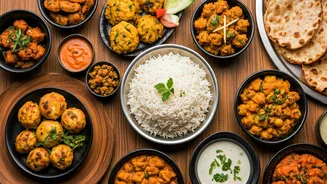








A Village That Eats Together
Imagine a place where the clatter of individual cooking pans is replaced by the cheerful hum of a communal kitchen. In Chandanki, a small village in Gujarat,
this isn't a fantasy; it's daily reality. This innovative approach sees residents pooling resources and efforts to prepare and share meals in a central dining hall, fostering an unprecedented sense of togetherness. The initiative was born out of a need to address the growing issue of loneliness among the elderly, particularly as younger generations moved to urban centers for employment, leaving behind a population grappling with isolation. Village head Poonambhai Patel, inspired by his time in New York City, envisioned a solution that would not only provide sustenance but also nurture social bonds. This collective dining experience is designed to bring people together, encouraging conversation, shared laughter, and mutual support, thereby transforming the simple act of eating into a powerful tool for community building and emotional well-being.
The Heartbeat of Chandanki
At the core of Chandanki's unique lifestyle is a well-organized system centered around a single, efficient kitchen and a welcoming community hall. This central culinary hub, typically managed by hired cooks, prepares traditional Gujarati fare daily, offering familiar and comforting dishes like khichdi, roti, sabzi, and chaas. For a nominal monthly fee of approximately ₹2,000 per person, residents receive two nourishing meals each day, ensuring consistent access to wholesome food. The cooks themselves are compensated with a fixed monthly salary of around ₹11,000, making the entire operation financially viable and sustainable. The community hall, equipped with air conditioning powered by solar panels, provides a comfortable and modern setting for these shared meals. More than just a dining space, it has evolved into a sanctuary for genuine human interaction. Here, conversations flow freely, with women discussing family matters, elders recounting life stories, and friends reminiscing over shared jokes. It also serves as a vital space for individuals to voice their concerns, discuss health issues, and find solace from loneliness, acting as a direct counterpoint to the isolation prevalent in many modern, fragmented societies.
Embracing the Change
Introducing significant lifestyle changes often encounters initial skepticism, and Chandanki's community kitchen was no exception. When the concept of a shared kitchen and communal dining was first proposed, many villagers expressed reservations. Concerns ranged from the potential loss of personal touch in meals to the forfeiture of the joy derived from home cooking. Some individuals simply found it difficult to embrace such a departure from established routines. However, through consistent effort and the demonstrable benefits, the villagers gradually warmed to the idea. The elderly, in particular, found immense relief as the daily burden of cooking was lifted, freeing up their time for rest, social engagement, and personal reflection. The dining hall transcended its basic function of serving food, becoming a place where individuals felt a profound sense of belonging. While the physical act of cooking might have moved out of private homes, the intrinsic warmth and spirit of home were revitalized and amplified within the communal space, infused with laughter, shared concerns, and small celebrations.
Why This Matters
Chandanki's initiative extends far beyond being a mere village anecdote; it stands as a potent illustration of how prioritizing human connection can yield transformative results. By establishing a shared kitchen and dining area, the village has effectively tackled the pervasive issue of loneliness and, in doing so, has revitalized a spirit of collective care and mutual support. This model demonstrates that meals need not be solitary affairs; instead, they can be vibrant events woven into the very fabric of social life. The ₹2,000 monthly contribution is not merely a payment for food; it represents an investment in maintaining and strengthening social bonds. Similarly, the central kitchen is more than an exercise in culinary efficiency; it is a testament to dignity, enabling the elderly to live their later years with support and companionship rather than facing them in solitude. This communal approach underscores the profound impact of social relationships on overall happiness and well-being.
The Power of Connection
The enduring significance of robust community ties and social relationships cannot be overstated; they are, in essence, vital ingredients for a fulfilling life. When individuals feel acknowledged, heard, and supported by those around them, life's challenges often feel more manageable. Strong connections with friends, family, and neighbors cultivate a sense of belonging, mitigate anxiety, and provide a crucial buffer against stress, as burdens are shared rather than borne alone. Extensive research consistently points to social connection, trust, and community belonging as fundamental drivers of happiness across diverse populations. Studies highlight social connectedness as a distinct protective factor against depression and anxiety in the general populace. Furthermore, long-term developmental studies, spanning decades, reveal that positive relationships and a sense of belonging are among the most reliable predictors of sustained happiness and even enhanced physical health well into older age. This collective evidence unequivocally points to the central role our relationships play in fostering both happiness and longevity, offering a gentle yet profound reminder of what truly enriches human existence.