




A Celestial Collision
In a remarkable display of scientific ingenuity, NASA's Double Asteroid Redirection Test (DART) mission has demonstrably altered the orbital path of a celestial
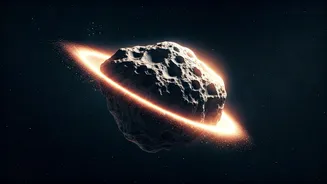
body. The target was Dimorphos, a smaller asteroid orbiting a larger one named Didymos. The mission's objective was to test a method for deflecting potentially hazardous asteroids, a crucial aspect of safeguarding our planet. By intentionally crashing a spacecraft into Dimorphos, scientists aimed to observe and quantify the resulting change in its trajectory. This controlled impact was designed to be a scalable solution, demonstrating that a kinetic impactor could indeed modify the path of a near-Earth object. The success of this mission offers a tangible demonstration of humanity's growing capacity to manage cosmic threats.
Impact and Orbit Shift
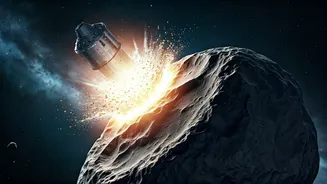
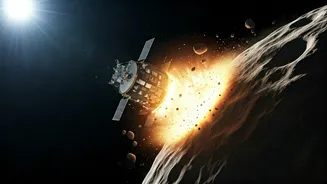
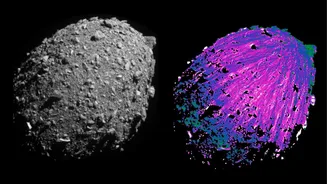
The DART spacecraft, a robust vessel weighing approximately 1,210 pounds, made a high-speed rendezvous with Dimorphos, striking it at an incredible velocity of about 14,700 miles per hour. This forceful impact was far from a gentle nudge; it excavated a significant crater on the asteroid's surface and propelled a substantial amount of rocky material outwards. This ejected debris acted like a series of tiny rockets, further pushing Dimorphos and contributing significantly to the observed orbital change. NASA's analysis confirmed that this celestial collision successfully shifted Dimorphos's orbit by a remarkable 32 minutes around its larger companion, Didymos. This precise measurement is key to validating the effectiveness of the kinetic impactor technique.
Lessons for Defense
The triumph of the DART mission represents a monumental leap forward in our ongoing efforts towards planetary defense. It definitively proves that employing kinetic impactors – essentially, hitting an asteroid with a spacecraft – is a viable strategy for altering the course of potentially threatening space rocks. The wealth of data meticulously gathered from this mission will serve as an invaluable resource for planning and executing future asteroid deflection scenarios. Understanding the precise amount of momentum transfer, the resulting ejecta plume's effect, and the overall orbital perturbation is critical for developing robust and reliable strategies to protect Earth from future asteroid impacts. This successful test builds confidence in our ability to respond to such celestial emergencies.