





The Pitcher's Peril
Pitcher plants are masters of passive trapping, employing deep, pitcher-shaped leaves that are essentially liquid-filled traps. Insects are lured in by
the plant's sweet nectar, but once they slip into the slippery interior, escape becomes impossible. They drown in the accumulated fluid. Some of the larger varieties, particularly within the Nepenthes genus, have evolved to capture more than just insects, sometimes ensnaring small rodents and other tiny creatures. This adaptation allows them to thrive in environments where soil-based nutrients are scarce, demonstrating a remarkable evolutionary path for survival.
Cobra Lily's Lure
The cobra lily, also known as the California pitcher plant, presents a visually striking trap. Its hooded, erect leaves bear a resemblance to a striking cobra's head. Insects are drawn into this deceptive structure, only to find themselves struggling on the slick inner surfaces. The plant's design makes escape incredibly difficult once the prey is inside. This species typically thrives in the damp, boggy regions found in northern California and extends its reach into southern Oregon, a testament to its specific habitat requirements for survival.
Sundew's Sticky Grip
Sundews possess leaves adorned with numerous small, glandular tentacles that exude a sticky mucilage, resembling glistening dewdrops. This alluring 'dew' attracts unsuspecting insects, which become ensnared on contact. Once the prey is trapped, the sundew's leaf slowly curls around it, initiating a digestive process to extract vital nutrients. These plants are commonly found in waterlogged bogs and acidic soils where the availability of essential nutrients from the ground is very limited, forcing them to seek alternative food sources.
Venus Flytrap's Snap
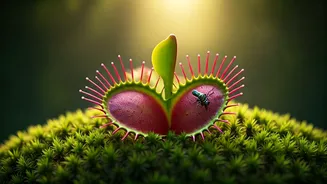
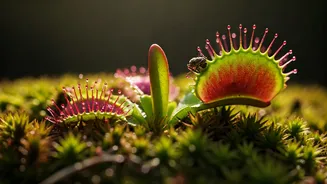
Arguably the most renowned of the carnivorous flora, the Venus flytrap employs a rapid, snap-trap mechanism. Its specialized leaf blades are lined with sensitive trigger hairs. When an insect makes contact with these hairs, the leaf edges snap shut with astonishing speed, effectively imprisoning the prey. While primarily feeding on insects, this plant has occasionally been observed capturing and digesting other minute animal life. Its fame stems from its dramatic and efficient predatory strategy.
Butterwort's Gentle Hold
Butterworts utilize their broad, flat leaves, which are covered in a layer of fine, sticky glands, to capture very small insects like gnats and fruit flies. Once an insect lands on the adhesive surface, it becomes stuck. The leaf then secretes digestive enzymes to break down the trapped prey. These plants are typically small and delicate, often found in moist environments where tiny airborne insects are abundant and easier for their specialized leaves to catch and digest for sustenance.
Waterwheel's Aquatic Hunt
The waterwheel plant stands out as an aquatic hunter among carnivorous species. It features small, intricate traps submerged beneath the water's surface. These specialized structures are designed to capture minuscule prey such as mosquito larvae and other tiny aquatic organisms. As a free-floating plant, it drifts with water currents, allowing its rapidly closing traps to ensnare unsuspecting aquatic life. This rare and endangered species showcases an adaptation to a completely different environment for nutrient acquisition.
Bladderwort's Swift Suction
Bladderworts are exceptionally fast aquatic carnivorous plants renowned for their suction-trap mechanism. They possess numerous small, hollow bladders that create a vacuum. When tiny prey, like insect larvae or water fleas, triggers the bladder's door, water is rapidly sucked in, pulling the prey along with it. These traps are among the quickest in the plant kingdom, making bladderworts highly effective predators in ponds and other wet habitats, securing essential nutrients from their watery surroundings.