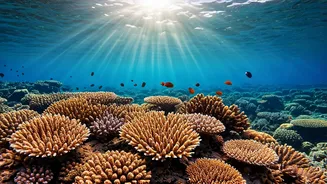




Reefs: India's Underwater Treasures
Coral reefs are extraordinary underwater ecosystems, often called the rainforests of the sea, that teem with biodiversity. In India, these vibrant habitats
are found along the coasts, providing shelter for countless marine species. The reefs are crucial for the health of oceans because they are home to a diverse array of fish, invertebrates, and plants. Besides their ecological significance, coral reefs also help protect coastlines from erosion. They act as natural barriers, reducing the impact of waves and storms, which is essential for coastal communities. The beauty of these reefs attracts tourism, generating income for local economies. In addition, the reefs are a source of inspiration for researchers, artists, and nature enthusiasts, enriching the cultural and scientific landscape.
Coral Bleaching: A Crisis
Coral bleaching represents a major threat to coral reefs globally, including those in India. This phenomenon happens when coral polyps, tiny animals that build coral structures, expel the algae (zooxanthellae) living inside them, causing the coral to turn white. This process is typically triggered by increased sea temperatures, often a result of climate change. Warmer waters stress the corals, leading them to expel the algae. When the algae are gone, the coral loses its primary food source and becomes vulnerable to disease and death. The effects of coral bleaching have been observed in numerous Indian reefs, with significant bleaching events recorded in recent years. Addressing the issue requires a concerted effort to reduce carbon emissions and mitigate the effects of climate change. Furthermore, there is a need to understand the local impacts of warming waters in order to safeguard coral reefs.
Andaman's Reef Research Hub
India is set to establish its first coral reef research center in the Andaman Islands, a significant step in conserving these vital ecosystems. This center will play a crucial role in studying the health of coral reefs, researching the impacts of climate change, and developing conservation strategies. The Andaman Islands are home to a number of diverse coral reefs. With the new research center, scientists and conservationists will have the opportunity to delve into the reefs, allowing for a deeper understanding of the local ecology and challenges. The center will become a hub for data collection, monitoring, and training, contributing to India's efforts to safeguard its marine biodiversity. The initiative aligns with India's commitment to protecting its natural heritage and promoting sustainable development. This can further aid in the preservation of Indian coral reefs.
Importance of Reefs
Coral reefs are indispensable to the health of the marine ecosystem. They support a vast array of marine life, including numerous species of fish, invertebrates, and plants. These diverse habitats are essential for biodiversity, providing food and shelter for countless organisms. They act as nurseries for young fish, fostering their growth and development. Healthy coral reefs help sustain fisheries, providing livelihoods and food security for communities. Coral reefs also help protect coastlines by buffering against erosion and minimizing the effects of storms. By absorbing wave energy, they safeguard coastal areas from damage and flooding. Moreover, coral reefs are a significant source of tourism revenue. Scuba diving, snorkeling, and other recreational activities around reefs attract tourists, contributing to economic growth and cultural exchange. Coral reefs are vital ecosystems that offer a range of economic, ecological, and cultural benefits.