


A Sapphire Spectacle
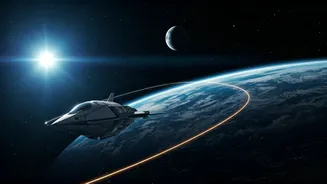
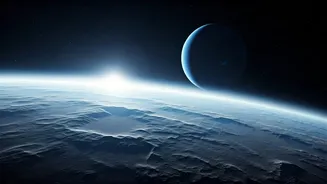
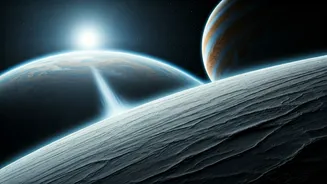
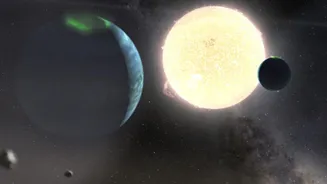
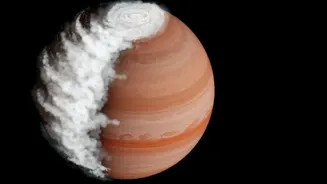
Imagine a world painted in the most vibrant shade of blue, so striking it's often called Earth's 'blue twin.' This is HD 189733b, an exoplanet located
a considerable 63 light-years from our solar system. Its captivating azure hue, observable even from vast cosmic distances, is a result of its atmosphere's composition. However, beneath this visually appealing facade lies a planet unlike any other, characterized by some of the most extreme atmospheric conditions known to science. While its color might evoke images of tranquil oceans, the reality of HD 189733b is far more volatile and awe-inspiring, a testament to the diverse and sometimes violent nature of planets beyond our own.
Extreme Atmospheric Fury
The beauty of HD 189733b is overshadowed by its incredibly violent atmosphere. Winds on this gas giant rage at an astonishing speed of up to 8,700 kilometers per hour, far exceeding the speed of sound on Earth. To put this into perspective, these winds are many times faster than the strongest hurricanes ever recorded on our planet. Compounding these ferocious winds are scorching temperatures that reach a blistering 1,000 degrees Celsius. This intense heat and chaotic atmospheric motion create a truly alien environment, where the very building blocks of the planet's atmosphere are transformed under immense pressure and thermal energy, setting the stage for its most peculiar feature.
Molten Glass Rain
The extreme conditions on HD 189733b lead to one of the most bizarre meteorological phenomena ever observed: rain made of molten glass. The high temperatures and the presence of silicate particles in the atmosphere cause these materials to condense and form glass. As this glass then falls from the sky, it remains in a liquid state due to the immense heat. This 'glass rain' is a direct consequence of the planet's unique atmospheric chemistry and physics, driven by its proximity to its star and the intense energy within its atmosphere. While its blue color might suggest water, the reality is a far more dangerous and spectacular downpour of liquid silica, making HD 189733b a world of perpetual, hazardous weather.
Not a Habitable World
Despite its resemblance to Earth in color, it is crucial to understand that HD 189733b is a gas giant and is unequivocally not a habitable planet. Its classification as a gas giant means it lacks a solid surface like Earth's, making conventional life as we know it impossible. Furthermore, the combination of extreme temperatures, devastating winds, and the constant rain of molten glass creates an environment far too hostile for any known form of life. The 'blue twin' moniker is purely descriptive of its visual appearance, serving as a stark reminder that cosmic beauty can often conceal profound danger and uninhabitability, highlighting the vast diversity of planetary outcomes in the universe.