
Aviation's Next Chapter
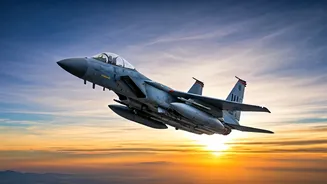
NASA's recent acquisition of a new F-15 fighter jet highlights a pivotal move in their pursuit of advanced aviation technologies. The purpose of this acquisition is to
support and facilitate the testing of the X-59, a specially designed supersonic aircraft. This initiative is a critical step towards realizing quieter supersonic flight. The F-15's role as a chase plane is vital, enabling crucial observation and testing capabilities during X-59 flight operations. It’s a strategic decision that underscores the commitment to pushing the boundaries of what's achievable in aerospace. The F-15 will play a crucial role in collecting data, monitoring the X-59's performance, and ensuring the safety of flight tests, providing vital support for the project's success. This is a clear signal that NASA is investing heavily in the future of flight, specifically in a future where supersonic travel becomes more accessible and less disruptive.
F-15: The Support Role
The F-15 fighter jet is set to play a significant role in NASA's supersonic program. As a chase plane, it will follow the X-59 during flight tests, acting as an essential tool for observation and data collection. The F-15, with its advanced capabilities, will provide engineers with crucial real-time information about the X-59's performance in various flight conditions. Equipped with specialized cameras and sensors, the F-15 will record detailed data, allowing for thorough analysis of the X-59's speed, altitude, and, most importantly, its noise levels. This real-time data collection will provide crucial insights for refining the X-59's design and enhancing its noise-reduction technology. The F-15 will fly near the X-59 to visually monitor its progress and ensure safety. This is an indispensable role in ensuring the successful development and testing of the revolutionary supersonic aircraft.
X-59's Quiet Ambition
The X-59 is NASA's groundbreaking supersonic aircraft that embodies the potential for quieter supersonic flight. Designed with a unique shape to mitigate the sonic boom, the X-59 aims to reduce the loud, disruptive noise typically associated with supersonic travel. The key goal is to create a 'sonic thump' instead of a boom, which promises to revolutionize the experience of supersonic flight. The aircraft's innovative design is engineered to minimize the impact of the sound waves generated during supersonic speeds. This design is crucial for allowing commercial supersonic flight over land, which is presently restricted due to noise concerns. The X-59 symbolizes a significant stride toward a future where supersonic travel becomes a standard, reducing flight times significantly without the annoyance and disruption of loud sonic booms.
Testing and Trials Ahead
With the new F-15 in hand, NASA is well-prepared to move forward with rigorous testing and trials for the X-59. The F-15 will be instrumental in the flight test program, providing critical observational support. The tests will encompass varied flight scenarios, allowing engineers to evaluate the X-59's performance under various conditions. The data gathered during these tests will feed directly into ongoing design refinements. The primary aim is to validate the X-59's quiet supersonic performance and collect essential data needed for further development and certification. The trials will allow NASA to refine the aircraft's technology. Ultimately, this comprehensive testing phase is crucial for demonstrating the X-59's capabilities and for gathering data needed for future certifications. The use of the F-15 guarantees that every aspect of the X-59's performance is carefully evaluated and refined.
Future of Supersonic Flight
NASA's project, with the new F-15, is not just about the X-59; it signifies a broader effort to pave the way for a new era of supersonic flight. The insights and technologies developed during this project have broad implications for the aviation industry. A quieter supersonic aircraft opens doors for faster travel and reduced travel times on commercial flights. The information learned in this project could revolutionize air travel worldwide, with significant implications for global transportation networks. NASA is hoping to enable commercial supersonic flight over land, which has long been limited by the noise issues. By tackling and mitigating the negative aspects of supersonic travel, NASA is actively working toward a more integrated, efficient, and less disruptive future for air travel around the globe.