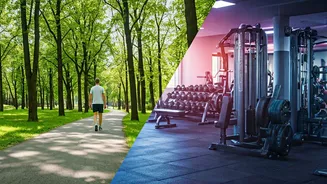



The Walking Foundation
Walking is celebrated as a cornerstone of physical well-being, offering accessible benefits for cardiovascular health, improved circulation, enhanced digestion,
and mental clarity. For individuals beginning their fitness journey or resuming activity after a hiatus, it serves as an excellent initial step. Its low impact nature makes it a universally adopted form of exercise that supports general movement and contributes positively to an active lifestyle. Many find it a sustainable way to maintain a baseline level of physical engagement, fostering a sense of accomplishment and contributing to overall health.
Beyond Basic Steps
As individuals progress in their fitness aspirations or as the body naturally ages, relying solely on walking often proves inadequate to meet diverse physiological demands. While it certainly keeps the body in motion, it typically fails to sufficiently challenge critical areas such as muscle strength, bone density, and metabolic rate. This can, over time, lead to a gradual decline in muscle mass, diminished joint stability, and a deceleration of the metabolism, even for those who remain generally active. The body requires more targeted stimulation to maintain its functional capacity and resilience.
The 40s Fitness Imperative
Trisha Krishnan's acknowledgment of needing more than just walking emphasizes the critical importance of progressive fitness, particularly for women navigating their 40s. Experts highlight that incorporating strength training, core exercises, and mobility work is vital. These disciplines actively build muscle, bolster joint protection, and improve posture. Resistance training, for instance, not only stimulates bone health but also enhances insulin sensitivity, a crucial factor for metabolic regulation. Concurrently, a strong core improves balance and significantly reduces the likelihood of injuries, creating a more robust and adaptable physique.
Holistic Health Strategy
From a comprehensive wellness viewpoint, walking should be perceived as the foundational layer, not the entire edifice of a fitness regimen. It ensures the body remains in motion, but it is the integration of strength and mobility exercises that truly equips the body to stay strong, agile, and functional over the long haul. For women in their 40s, this is particularly crucial due to hormonal shifts that can impact muscle and bone health. The most effective approach involves a balanced combination of walking, strength training, flexibility work, and adequate recovery, fostering sustainable health rather than depending on a single mode of activity.